Portuguese Tiles (Azulejos): A Guide to Buying Authentic Ceramic Art
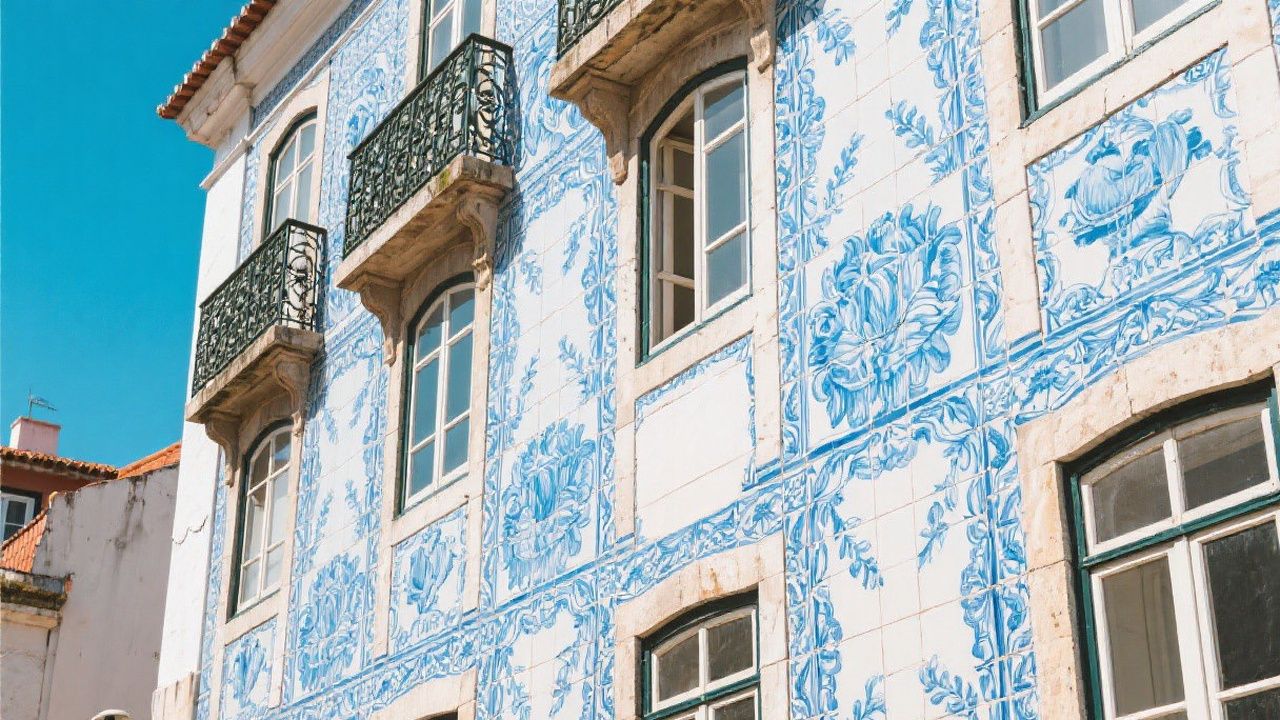
The first time I noticed Portuguese tiles properly, I was walking up the Calcada da Gloria in Lisbon and stopped in front of a building covered in blue-and-white panels depicting scenes from the Portuguese discoveries. The tiles were cracked in places, faded by decades of salt air, and absolutely breathtaking. I spent three days photographing azulejos across the city, from the monumental Sao Bento railway station panels to tiny hand-painted number tiles on Alfama apartment doors. By the time I flew home, my suitcase contained four ceramic tiles wrapped in every piece of clothing I owned. I have been buying Portuguese azulejos ever since.
Portugal's tile tradition spans over five centuries, and the craft is experiencing a renaissance. Young artists blend traditional techniques with contemporary designs, and growing numbers of workshops welcome visitors. Buying authentic Portuguese ceramic art, specifically Portuguese azulejos, requires knowing where to look, how to spot mass-produced imitations, and what to expect in pricing and logistics.
History of Portuguese Tiles
The word azulejo comes from the Arabic al-zulayj, meaning polished stone, and the technique arrived through the Moors in the 13th century. Portugal developed a tile culture entirely its own. The earliest surviving tiles date to the late 15th century, when King Manuel I imported Sevillian craftsmen to decorate the National Palace of Sintra. By the 18th century, Portugal was producing tiles on an industrial scale, and the distinctive blue-and-white style had become a defining architectural feature.
Walking through Lisbon is like walking through a 500-year timeline. Gothic patterns at the Convent of Christ in Tomar date to the 1500s. The massive allegorical panels at Fronteira Palace use a majolica technique where designs are painted onto unfired glaze. The Baroque era produced some of the most elaborate tile work in the world, with entire church interiors sheathed in painted ceramics. The National Tile Museum in Lisbon, housed in the former Convent of Madre de Deus, covers five centuries of tile art. Admission is EUR 8, and the museum shop sells reproduction tiles from EUR 15. After two hours there, I could identify the difference between 16th-century patterns, 17th-century figurative panels, and 18th-century mass-produced repeats.
Tile Museums and Workshops
Lisbon and Porto are the best cities for visiting workshops. In Lisbon, Viuva Lamego has produced hand-painted tiles since 1849 and operates a factory and showroom in Campo de Ourique. You can watch artisans painting freehand with traditional oxide pigments. Individual tiles start at EUR 25, decorative panels from EUR 150. I bought a 30-by-30-centimeter panel depicting a Lisbon tram for EUR 180. The factory visit is free; call ahead at +351 21 396 1200.
In Porto, the Fabrica de Ceramica Viuva Lamego operates near Sao Bento station, whose grand hall features famous 1916 tile panels by Jorge Colaco. The workshop sells reproduction panels from EUR 120 to EUR 400. For contemporary work, visit Oficina do Azulejo in the Ribeira district, where Clara Menares creates modern geometric tiles starting at EUR 30 each. Azulejos de Sant'Anna, operating since 1745, is one of Portugal's oldest tile factories and sells individual pieces from EUR 20 using traditional hand-pressing techniques.
Shipping Fragile Items
Shipping tiles is the single biggest challenge. The most reliable method is having the workshop arrange professional shipping. Viuva Lamego ships internationally for EUR 40 to EUR 80 per panel with full insurance. After losing a EUR 200 panel to cracked glaze in my own suitcase, I consider this money well spent.
If you carry tiles home, wrap each in bubble wrap, place inside a hard-shell suitcase surrounded by clothing on all sides. Never put tiles in soft-sided luggage. I layer bubble wrap, towel, tile, towel, more bubble wrap, and pack the bundle in the center with shoes and clothing packed tightly around it. For larger panels, professional shipping is the only safe option. Portuguese Post (CTT) ships a single 20-centimeter tile to the US for EUR 25 to EUR 35, with delivery in 7 to 14 days. A box of six tiles to the UK costs around EUR 40 total.
Types of Azulejos

Hand-painted tiles are the gold standard. An artisan applies the design freehand using oxide-based pigments, then the tile is glazed and fired. Each is unique, with slight variations in line and color. Expect EUR 25 to EUR 60 per tile depending on design complexity. Transfer-printed tiles use a paper transfer technique for consistent reproduction at lower cost. Quality transfer tiles sell for EUR 8 to EUR 20 and are fine for decoration but lack the depth of hand-painted work. Many tourist shops sell transfer-printed tiles at hand-painted prices, so ask directly which technique was used.
Mosaic tiles, made from small ceramic pieces forming larger images, are another traditional form. The Lisbon Metro stations at Baixa-Chiado and Oriente feature stunning contemporary installations. Individual mosaic tiles cost EUR 2 to EUR 5, but you need hundreds for any meaningful image. Pre-assembled 30-centimeter panels cost EUR 80 to EUR 200 from shops like Mosaic Portugal in Cascais. Several workshops also offer hands-on classes where you create your own tile for EUR 50 to EUR 75, including materials and firing.
Essential Tips to Keep in Mind
- Ask whether a tile is hand-painted or transfer-printed. Hand-painted costs more but is genuine artisan work.
- Visit the National Tile Museum before shopping. The EUR 8 admission provides essential context for evaluating quality.
- Buy directly from workshops rather than tourist shops for lower prices and the chance to meet artisans.
- Have workshops ship larger panels professionally. The EUR 40 to EUR 80 cost beats replacing a broken piece.
- Look for the workshop's stamp on the back of the tile, the most reliable authenticity indicator.
- Consider commissioning a custom tile. Many workshops accept commissions starting at EUR 100.
Frequently Asked Questions
How can I tell if a tile is hand-painted or printed?
Hand-painted tiles show slight variations in brushstroke width and color density. Printed tiles have perfectly uniform lines. The back may also bear a workshop stamp indicating authenticity.
Are Portuguese tiles suitable for outdoor installation?
Traditional azulejos are fired at high temperatures and are frost-resistant, making them suitable for most outdoor climates. Hand-painted tiles with complex glazes may fade over decades of direct sun. Ask the workshop about specific durability.
Can I visit tile factories without an appointment?
Some workshops like Viuva Lamego accept walk-ins during business hours. Smaller operations prefer advance notice. Calling a day ahead is always a good idea.
Final Thoughts
Portuguese azulejos are one of Europe's most distinctive and accessible art forms. You do not need to be a collector or spend a fortune. A single hand-painted tile from a Lisbon workshop, mounted in a simple frame, becomes a piece of Portuguese culture you will look at every day. Seek out the workshops, talk to the painters, and choose something that speaks to you. The tiles will outlast all of us.