A Complete Guide to Exploring the Yucatan Peninsula: Cancun to Tulum
Tulum Ruins and Beaches
The Tulum archaeological site is small compared to Chichén Itzá or Uxmal, but its setting is unmatched — a walled Maya city perched on a 12-meter limestone cliff above the turquoise Caribbean Sea. I arrived at 8 AM when the gates opened (entry is 90 pesos, about $5.50 USD) and had the Templo del Dios del Viento to myself for ten minutes before the first tour group arrived. The site takes about 1.5 hours to explore. The most photographed structure is the Castillo, a pyramid-like temple on the cliff's edge with the ocean as its backdrop.
The beach below the ruins is accessible via a wooden staircase and is one of the most beautiful stretches of sand on the Riviera Maya. The water is calm, clear, and perfect for swimming year-round (26-28°C). There are no facilities on the beach, so bring water and snacks. After exploring the ruins, I walked south along the beach and found a quiet spot with no other people — just me, the waves, and a frigate bird circling overhead.
Coba Bicycle Ruins Tour
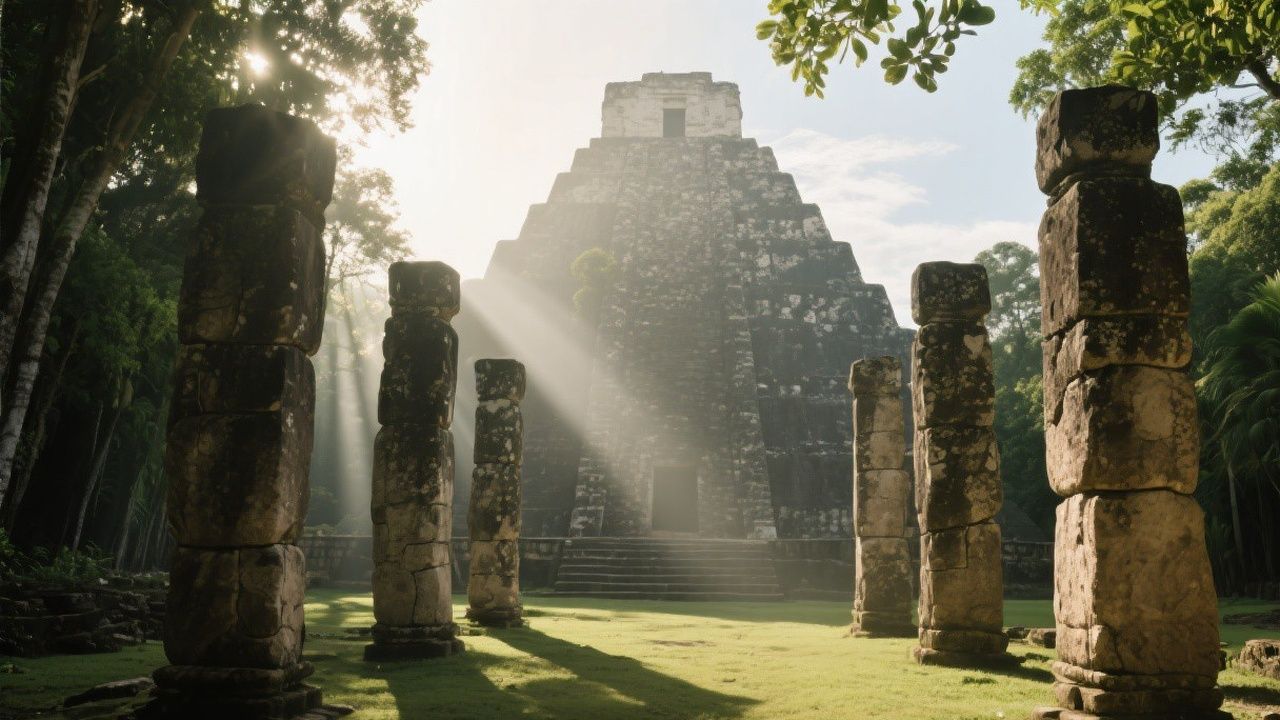
The Coba archaeological site, about 45 minutes inland from Tulum, was a revelation. Unlike Chichén Itzá, Coba is set deep in the jungle and its structures are spread across a vast area connected by shaded dirt paths. I rented a bicycle at the entrance (60 pesos for the day) and spent three hours riding between temple groups, dodging iguanas and listening to howler monkeys in the canopy above.
The highlight is the Nohoch Mul pyramid, at 42 meters the tallest pyramid in the Yucatán Peninsula. Unlike most Mexican archaeological sites, you can still climb it — 120 steep stone steps to the top, where you're rewarded with a view of the jungle canopy stretching to the horizon. It's a thrilling experience: the steps are uneven and worn, there's no handrail, and the drop on either side is significant. Take your time, wear shoes with grip, and don't attempt it in wet weather.
Entry to Coba costs 100 pesos (about $6 USD). The site opens at 8 AM — arrive early because by 10:30 AM the heat and humidity are intense, and there's essentially no shade on the pyramid. There are cenotes near the site — Cenote Choc-Ha and Cenote Multum-Ha — where you can cool off after your visit. Both charge about 100 pesos for entry.
Chichen Itza Exploration
Chichén Itzá is one of the New Seven Wonders of the World, and the scale and precision of the architecture are genuinely staggering. The Pyramid of Kukulcán (El Castillo) dominates the site, and its mathematical and astronomical sophistication — 365 steps, one for each day of the year; the shadow of a serpent appears on the equinoxes — is remarkable. But the experience is significantly diminished by the commercial atmosphere. The site is surrounded by hundreds of vendors selling mass-produced souvenirs, and the crowds were overwhelming even on a weekday in November.
Go early. The site opens at 8 AM and tour buses from Cancun start arriving around 10 AM. I was there by 8:15 and had the main plaza mostly to myself for 45 minutes. By 11 AM, the area around El Castillo was so crowded that photography was nearly impossible.
Mexican Food Highlights
The Yucatán has a distinct culinary tradition shaped by Maya ingredients, European influences, and Caribbean trade routes. The three dishes you must try are cochinita pibil (slow-roasted pork marinated in achiote and bitter orange, wrapped in banana leaves), sopa de lima (tangy chicken soup with local lima citrus), and papadzules (tortillas filled with hard-boiled egg and topped with pumpkin seed sauce). I had all three at La Cocina de Papi in Valladolid — a tiny, family-run place with plastic chairs and the best food I ate in two weeks. The cochinita pibil plate cost 95 pesos ($5.70 USD).
In Tulum, ignore the trendy spots on the main road and go to Antojitos La Chiapaneca, a no-frills taco stand serving locals for over 20 years. Tacos al pastor (4 for 50 pesos), cochinita pibil tacos (4 for 60 pesos), and fresh agua de chaya for 20 pesos. I ate there four times in four days and never spent more than 100 pesos for a meal that left me stuffed.
In Valladolid, don't miss the market on Calle 39 — the second floor food court serves authentic Yucatecan breakfast for 40-60 pesos. I had huevos motuleños (fried tortillas topped with black beans, fried eggs, peas, and plantains) with a cup of atole for 55 pesos. One of the best breakfasts of my life.
Essential Tips to Keep in Mind
- Visit cenotes in the morning. These natural sinkholes are one of the Yucatán's greatest attractions. Popular cenotes like Gran Cenote and Dos Ojos get crowded by 11 AM. Entry typically costs 100-200 pesos. Bring biodegradable sunscreen (regular sunscreen is prohibited).
- Take the ADO bus instead of renting a car. A one-way ticket from Cancun to Tulum costs 220 pesos ($13 USD) and takes about 2 hours. The bus from Tulum to Valladolid costs 180 pesos and takes 2.5 hours. Driving is safe but the highways are narrow and speed bumps (topes) are everywhere.
- Use pesos, not dollars. Many places accept USD but at terrible exchange rates (10-13 pesos per dollar instead of 17-18). Withdraw pesos from ATMs in town — avoid airport ATMs.
- The mosquito situation is serious, especially in Tulum and the jungle areas. Bring repellent containing DEET or picaridin, and apply it at dawn and dusk.
- Stay in Valladolid for at least two nights. It's a gorgeous colonial city with excellent food, a central square with a cathedral, and easy access to Chichén Itzá and the Cenote Zaci. Hotels cost 400-700 pesos per night.
Frequently Asked Questions
Is the Yucatán Peninsula safe? Yes, the main tourist areas (Cancun, Playa del Carmen, Tulum, Valladolid, Mérida) are generally safe. Use common sense — don't flash valuables and don't walk alone on dark beaches at night.
How many days do you need for the Yucatán? Minimum 10 days for a comfortable pace covering Tulum, Coba, Valladolid, Chichén Itzá, and Mérida. Two weeks is better and allows time for cenotes, beaches, and spontaneous discoveries.
Do you need to speak Spanish? It helps enormously, especially outside the main tourist zones. In Tulum and Cancun, English is widely spoken. In Valladolid and smaller towns, basic Spanish goes a long way.
Final Thoughts
The Yucatán Peninsula delivers on every level — history, nature, food, culture, and relaxation — without requiring a massive budget or months of planning. I swam in cenotes that felt like entering another world, climbed pyramids built a thousand years ago, and ate meals that cost less than a cup of coffee at home. The region is far more than a spring break destination. It's a place with deep roots, genuine warmth, and an astonishing density of things worth seeing. Go slow, eat everything, and don't skip Valladolid — it might be my favorite town in all of Mexico.