The Best Spices to Buy in India and How to Use Them at Home
The first time I walked into Khari Baoli in Old Delhi, the sheer sensory overload nearly knocked me sideways. Sacks of turmeric, cardamom, cumin, and chili piled five meters high, the air so thick with spice dust that I could taste it on my lips. I bought a kilogram of Kashmiri saffron for 800 rupees from a third-generation spice merchant who tested each strand under a magnifying glass before weighing it. That saffron lasted me a year and made every paella and risotto I cooked taste like it came from a restaurant. Buying spices in India is not just shopping; it is an education in flavor that will change your cooking permanently.
Identifying Quality Spices
The single most important thing to understand about buying spices in India is that color and appearance can be deceiving. Adulterated turmeric dyed with metanil yellow, cassia bark sold as cinnamon, and dyed papaya seeds masquerading as black pepper are all common scams. Real turmeric has a deep, warm orange-yellow color and a slightly earthy, bitter aroma. If it stains your fingers an unnaturally vivid yellow, it may contain artificial dyes. Rub a small amount between your fingers; genuine turmeric leaves a warm, slightly oily residue, while dyed powder feels dry and chalky.
For saffron, the most expensive and most frequently adulterated spice, there are three reliable tests. First, real saffron threads are trumpet-shaped, not flat or straight. Second, place a few threads in warm water; genuine saffron slowly releases a golden-yellow color over 10 to 15 minutes, while fake saffron bleeds red immediately. Third, real saffron has a complex honey-floral aroma, while fake saffron (often corn silk or dyed horsehair) smells like nothing or like chemicals. Expect to pay 250 to 500 rupees per gram for genuine Kashmiri saffron, and 800 to 1,200 rupees for the premium Mogra grade.
Cardamom is another spice where quality varies dramatically. Green cardamom from Kerala's Western Ghats is the gold standard, with plump, intensely aromatic pods that smell like eucalyptus and citrus. Avoid pods that are pale, dry, or cracked, as they have lost their essential oils. A good 100-gram packet of whole green cardamom costs 300 to 600 rupees at a spice market, compared to 800 to 1,200 rupees in a Western grocery store for an inferior product.
Grinding Whole Spices at Home
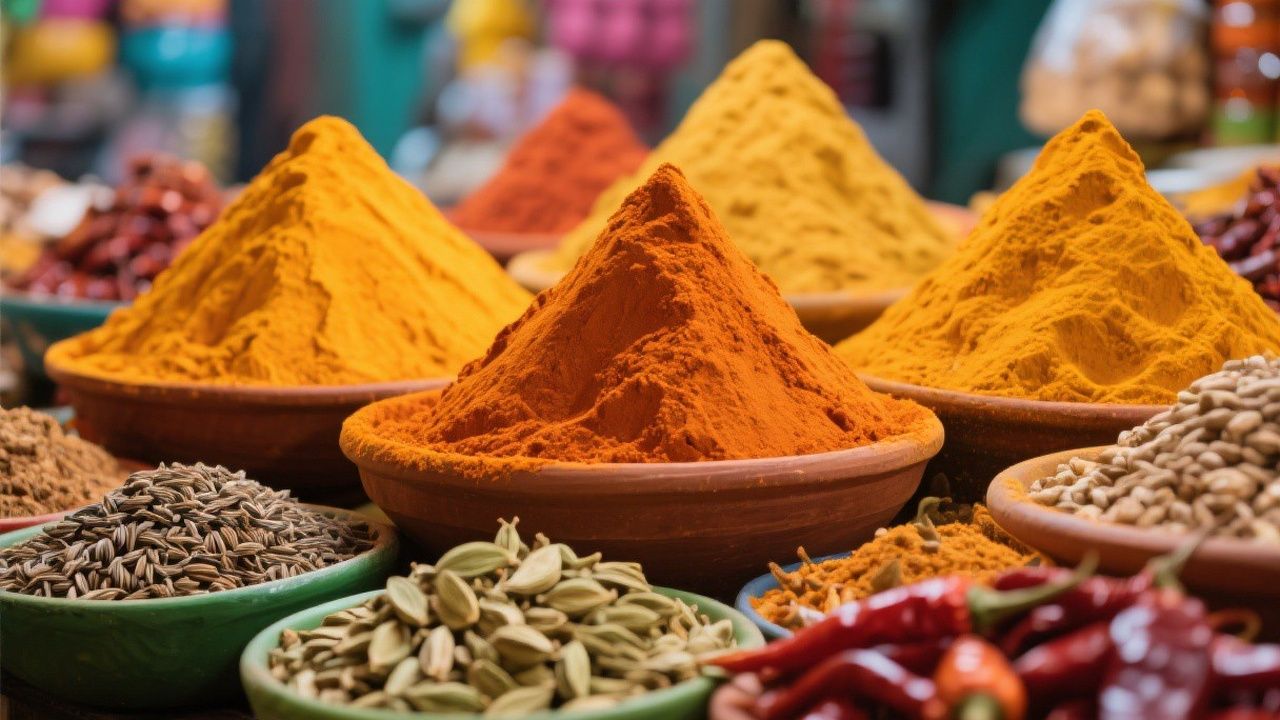
The difference between pre-ground spices and freshly ground whole spices is not subtle. It is the difference between a photograph and the real thing. Pre-ground cumin loses up to 50 percent of its volatile oils within six months of grinding, which is why that jar of cumin powder in your pantry tastes like dusty cardboard. Whole cumin seeds, stored properly, retain their potency for two to three years.
I bought a small cast-iron mortar and pestle in Jodhpur for 350 rupees, and it has become the most-used tool in my kitchen. For larger quantities, a dedicated coffee grinder (never one you also use for coffee) works brilliantly. Dry-roast whole spices in a hot pan for 30 to 60 seconds until fragrant, then grind immediately. The aroma that fills your kitchen will convince you never to buy pre-ground again. A basic 200-watt mixer-grinder from a brand like Preethi costs 1,500 to 3,000 rupees in India and is worth every rupee if you cook Indian food regularly.
The essential whole spices to buy in India are cumin seeds (jeera), coriander seeds (dhania), black mustard seeds (rai), fenugreek seeds (methi), and whole cloves (laung). Together, these five form the backbone of most Indian spice blends. A 500-gram bag of each costs roughly 50 to 150 rupees at a wholesale market, and they will last a home cook for months. Garam masala, the most famous Indian spice blend, is best made at home by combining toasted cumin, coriander, cardamom, black pepper, cinnamon, and cloves in specific ratios that vary by region and family tradition.
Spice Markets to Visit
Khari Baoli in Old Delhi is Asia's largest wholesale spice market, and it is absolutely worth a visit even if you are not buying in bulk. The narrow lane is lined with shops that have been operating for generations, and the merchants are incredibly knowledgeable. I spent two hours at Mahashi Chand & Sons, a shop established in 1910, and the owner walked me through a tasting of six different varieties of chili, explaining the flavor profile and heat level of each. Prices here are 30 to 50 percent lower than retail shops, but most vendors sell in minimum quantities of 250 grams to 1 kilogram.
In Kerala, the spice markets of Kochi and Thekkady offer a different experience focused on the spices that grow in the region: black pepper, cardamom, cinnamon, and nutmeg. The spice plantation tours in Thekkady, which cost 200 to 500 rupees per person, are genuinely educational and end with a shop where you can buy directly from the plantation. I bought 200 grams of Malabar black pepper for 150 rupees and a 100-gram jar of freshly ground cardamom for 200 rupees, both far superior to anything available in supermarkets.
Jodhpur's Clock Tower spice market is smaller than Khari Baoli but more tourist-friendly, with fixed-price government emporiums alongside traditional vendors. The Rajasthan Government Handicraft Emporium near the clock tower sells pre-packaged spice sets with clear labeling and quality guarantees, though at a 20 to 30 percent premium over market prices. It is a good option if you want to buy a curated set without the stress of bargaining.
Proper Storage Techniques

Spices are more fragile than most people realize. Heat, light, moisture, and air are the four enemies of spice freshness, and a spice rack mounted above the stove is practically a graveyard for flavor. I store my whole spices in airtight glass jars in a cool, dark cupboard, and my ground spices in the refrigerator in sealed containers. This simple practice has kept my Kashmiri chili powder vibrant and potent for over a year.
For long-term storage, glass jars with rubber-sealed lids are far superior to plastic containers. Plastic is permeable to air and can absorb spice aromas, leading to cross-contamination. I bought a set of 12 small glass jars with clamp lids from a kitchen supply shop in Mumbai for 600 rupees, and they have been perfect. Label each jar with the purchase date and the spice name, and use ground spices within six months and whole spices within two years.
If you are traveling with spices, pack them in sealed plastic bags inside your checked luggage. Indian customs generally allows up to 5 kilograms of spices for personal use without any issues. For international travel, check your destination country's regulations. The US, UK, and EU allow most dried spices but may require declaration. Australia and New Zealand have stricter rules and may require treatment or prohibit certain items entirely.
Essential Tips to Keep in Mind
- Buy whole spices whenever possible. They last longer, taste better, and give you the option to grind them fresh for each dish.
- Avoid pre-packaged spice mixes from tourist shops unless you recognize the brand. Many of these are old stock with diminished flavor.
- Ask to taste and smell spices before buying. Reputable vendors will encourage this and may even offer you a small sample to take home.
- Carry a small notebook or use your phone to record the names of spices in Hindi and the local language. This helps when shopping in markets where English is limited.
- If a spice price seems too good to be true, it probably is. Genuine Kashmiri saffron at 50 rupees per gram is almost certainly fake.
Frequently Asked Questions
How much should I budget for spices in India?
A comprehensive spice collection of 10 to 15 varieties costs 1,000 to 2,500 rupees ($12 to $30) at market prices. Even with generous buying, you are unlikely to spend more than 3,000 rupees unless purchasing saffron in quantity.
Can I carry spices in my hand luggage on flights?
Dry spices in sealed containers are generally allowed in hand luggage, but security agents may inspect them. For simplicity and to avoid delays, pack all spices in checked baggage.
What is the difference between garam masala and curry powder?
Garam masala is a specific Indian spice blend typically containing cumin, coriander, cardamom, black pepper, cinnamon, and cloves. Curry powder is a British invention that approximates Indian flavors but is not used in authentic Indian cooking. If you buy one blend in India, make it garam masala.
Final Thoughts
Buying Indian spices at the source is one of the most impactful things you can do for your home cooking. The flavors are brighter, the aromas are more complex, and the prices are so low that you can afford to be generous. A kilogram of cumin seeds costs less than a single jar of the pre-ground version at home, and the quality difference is extraordinary. Visit the markets, buy whole, grind fresh, and store carefully. Your spice rack will never be the same.