Chinese Tea: A Beginner's Guide to Buying Authentic Tea in China
The first tea I drank in China was served to me by an elderly man in a park in Hangzhou at 6:30 in the morning. He poured it from a glass thermos into a small ceramic cup, and the liquid was the palest green, almost colorless. One sip and my entire understanding of tea collapsed and rebuilt itself in an instant. It was Longjing — Dragon Well — tea, and it tasted like spring vegetables, sweet corn, and chestnuts, with a clean, lingering finish that lasted minutes. The man told me he drinks this every morning, has done so for 40 years, and buys it fresh every spring from a farmer outside Hangzhou. That cup of tea, which probably cost him the equivalent of 50 cents, was better than any tea I had ever paid 10 dollars for in a Western tea shop. China's tea culture runs deep, and buying tea here — in the markets, farms, and teahouses where it originates — is one of the most rewarding things a traveler can do.
Longjing Green Tea Guide
Longjing, or Dragon Well tea, is China's most famous green tea, and the area around West Lake in Hangzhou is where the best of it is grown. The tea is pan-fired rather than steamed, which gives it a distinctive flat, sword-shaped leaf and a roasted, nutty character that sets it apart from Japanese green teas. Longjing is graded by harvest time, and the differences between grades are dramatic. Pre-Qingming Longjing, harvested before the Qingming Festival in early April, is the most prized and expensive. The leaves are tiny, tender, and packed with amino acids that produce a sweet, umami-rich flavor. A 50-gram package of genuine Pre-Qingming Longjing from a West Lake village costs 300 to 800 RMB depending on the specific village and the farmer's reputation.
Post-Qingming Longjing, harvested between Qingming and Guyu (mid-April), is the sweet spot for most buyers. The leaves are slightly larger, the flavor is a bit more robust, and the price drops to 100 to 300 RMB per 50 grams. This is the grade I buy for daily drinking, and it is genuinely excellent. The tea has a bright green color in the cup, a chestnut-like sweetness, and a clean finish with no bitterness. Below this, there is summer-harvest Longjing, which is darker, more astringent, and costs 30 to 80 RMB per 50 grams. It is fine for cooking or for making iced tea, but it lacks the delicacy that makes Longjing special.
The biggest challenge with Longjing is avoiding counterfeits. Genuine West Lake Longjing is produced in limited quantities, and the demand far exceeds the supply. An estimated 80 percent or more of the tea sold as "West Lake Longjing" in China is actually grown elsewhere — often in neighboring provinces like Anhui or Sichuan — and sold under the Longjing name. To buy the real thing, go directly to the villages around West Lake: Meijiawu, Longjing Village, and Wengjiashan all have tea farms where you can taste and buy directly. The farmers will brew multiple grades for you to compare, and the difference between genuine West Lake Longjing and the imitation stuff is immediately apparent. Real West Lake Longjing has a sweet, lingering aftertaste (hui gan) that imitations lack.
Identifying Quality Tea Leaves

Evaluating tea quality in China follows a systematic approach that anyone can learn. The first criterion is appearance. High-quality tea leaves should be whole, uniform in size, and free of stems, dust, or broken pieces. For green tea like Longjing, the leaves should be a vibrant, consistent green. Yellow or brown leaves indicate oxidation or poor storage. For black tea like Dianhong from Yunnan, the leaves should be dark and wiry with golden tips (fine, downy buds). For oolong tea like Tieguanyin, the leaves should be tightly rolled into dense, heavy balls that unfurl slowly during brewing.
The aroma is the second and arguably most important criterion. High-quality tea has a complex, layered aroma that changes as the leaves warm up. Smell the dry leaves first, then smell them again after adding hot water. Longjing should smell sweet and nutty. Tieguanyin should have a pronounced floral aroma — like orchids or gardenias. Pu-erh should smell earthy and deep, like a forest floor after rain, with no mustiness or mold. If tea smells flat, stale, or off-putting, it is either old or poorly stored, regardless of how it looks.
The third criterion is the taste and the liquor (the color of the brewed tea). Brew a small amount — about 3 grams in 150ml of water at the appropriate temperature — and evaluate. Good tea produces a clear, bright liquor with no cloudiness. The taste should have depth and complexity, with a beginning, middle, and end. Most importantly, good tea has hui gan — a sweet aftertaste that appears 10 to 30 seconds after swallowing and lingers for minutes. Cheap tea tastes flat and disappears immediately. The best way to develop your palate is to taste multiple teas side by side. Any reputable tea shop in China will prepare samples for comparison, and most do not charge for this service.
Famous Chinese Tea Regions
China's tea geography is vast, and each region produces distinct varieties that reflect local terroir. Zhejiang province, centered on Hangzhou, is the heartland of green tea production. Beyond Longjing, Zhejiang produces Anji Bai Cha (White Tea, which is actually a green tea made from a pale-leaved cultivar), known for its fresh, sweet, almost melon-like flavor. A 100-gram package costs 150 to 400 RMB. Fujian province is the center of oolong and white tea production. Wuyi Rock Tea (Yancha) from the Wuyi Mountains is a heavily roasted oolong with a mineral, smoky character — the most famous variety is Da Hong Pao (Big Red Robe), which can cost 500 to 5,000 RMB per 50 grams for genuine single-bush tea. For a more accessible introduction, try a Wuyi Rougui (cinnamon) oolong at 100 to 300 RMB per 50 grams.
Yunnan province in southwest China is famous for two things: Pu-erh tea and Dianhong black tea. Pu-erh comes in two forms: raw (sheng) and ripe (shou). Raw Pu-erh is earthy, astringent, and can age for decades, developing complexity over time. Ripe Pu-erh is smoother, darker, and more immediately approachable, with a rich, woody flavor. A 357-gram pressed cake of decent ripe Pu-erh costs 80 to 300 RMB. Dianhong (Yunnan Black Tea) is another Yunnan specialty — the Golden Tips (Jin Ya) grade, with its abundance of golden buds, produces a sweet, malty, honey-like cup that is extraordinary without milk. A 100-gram tin costs 60 to 200 RMB.
Taiwan, while not part of mainland China, is essential to any discussion of Chinese tea. Taiwanese high mountain oolongs — particularly from Alishan, Lishan, and Shanlinxi — are among the finest teas in the world. They are floral, creamy, and have a buttery smoothness that is addictive. A 150-gram package of Alishan oolong costs 300 to 800 TWD (about 70 to 190 RMB) in Taiwan. If you are traveling through Taiwan on the same trip, set aside a day for tea shopping in Taipei's Maokong area.
Proper Storage Methods
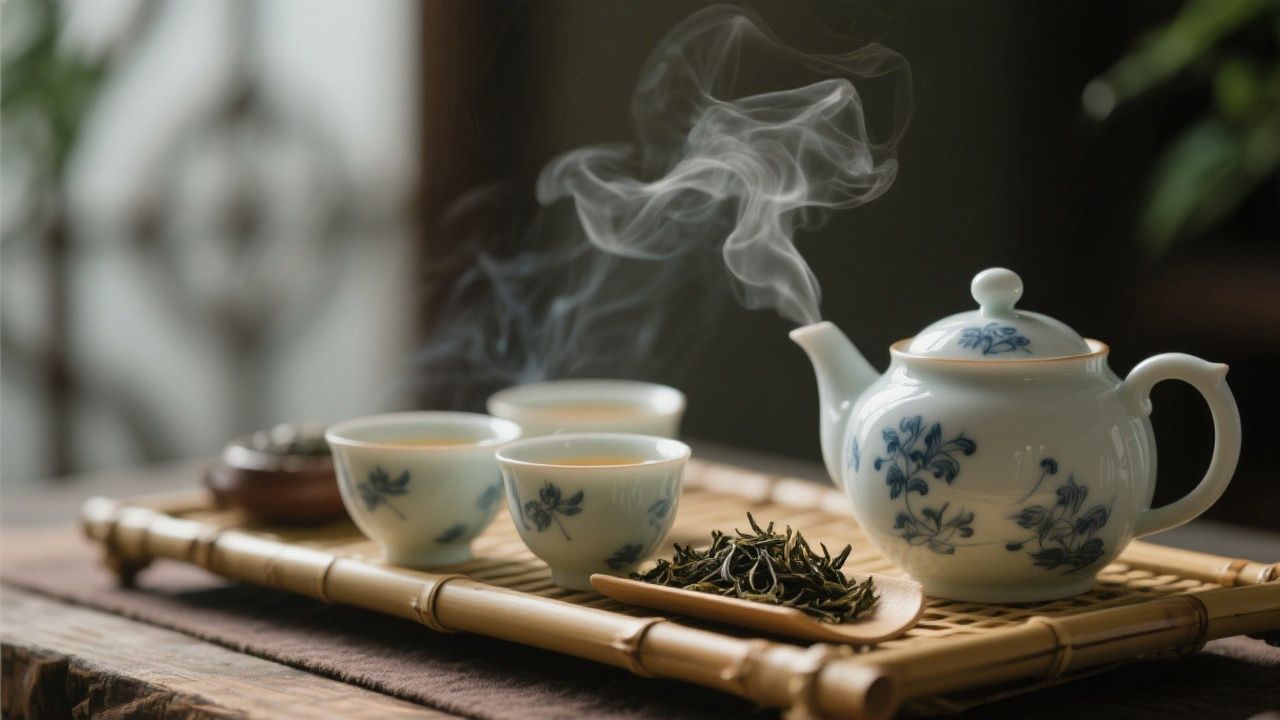
Proper storage is critical for maintaining tea quality, and the requirements vary by tea type. Green tea and yellow tea are the most perishable. They should be stored in airtight, opaque containers — vacuum-sealed bags or tin cans with tight lids — and kept in the refrigerator. Unopened, vacuum-sealed Longjing will last 12 to 18 months in the fridge. Once opened, consume within 2 to 3 months for the best flavor. Do not freeze green tea, as the moisture from condensation when thawing can damage the leaves. I store my green tea in a dedicated tin in the refrigerator door, sealed with tape, and it stays fresh for months.
Oolong tea is more forgiving. Light oolongs like Tieguanyin should be stored in airtight containers at room temperature, away from strong odors. They will maintain good flavor for 1 to 2 years. Dark, roasted oolongs like Wuyi Yancha actually improve with a few months of aging, as the roast mellows and integrates. Store them in a cool, dry place in paper bags or ceramic jars that allow slight airflow. Pu-erh tea is the champion of longevity. Both raw and ripe Pu-erh are designed to age, and proper storage can improve them for decades. Store Pu-erh cakes in a cool, dry, well-ventilated area away from direct sunlight and strong odors. A cardboard box or a breathable cotton bag is ideal. Many serious Pu-erh collectors dedicate a shelf or even an entire room to aging their tea.
Black tea and white tea fall in between. Black tea lasts 2 to 3 years in a sealed container at room temperature. White tea, particularly Shou Mei and Bai Mu Dan grades, can age beautifully for 5 to 10 years or more, developing deeper, honeyed flavors over time. The key for all tea storage is consistent temperature, low humidity, and protection from odors. Tea is incredibly absorbent and will pick up the scent of anything stored nearby — keep it away from spices, soap, and perfume.
Essential Tips to Keep in Mind
- Always taste before buying. Reputable tea shops in China will prepare samples for free. If a shop refuses to let you taste before purchasing, go elsewhere.
- Buy from tea markets rather than tourist shops. The Fangcun Tea Market in Guangzhou and the Maliandao Tea Market in Beijing offer enormous selections at fair prices. Tourist-oriented shops near scenic areas charge 2 to 5 times more.
- Learn basic tea terminology. "Pre-Qingming" (before April 5) indicates the highest grade of spring tea. "Single-bush" (dan cong) refers to tea from a single tree. "Aged" (chen nian) refers to tea that has been stored for years.
- Bring a small thermos when visiting tea farms. Farmers will often brew tea for you, and having your own cup means you can take samples with you to compare later.
- Declare tea at customs. Most countries allow up to 5 kilograms of processed tea for personal import. Loose-leaf tea is generally fine, but some countries restrict plants and soil attached to tea leaves.
Frequently Asked Questions
How much does good Chinese tea cost? Prices vary enormously. Decent daily-drinking green tea costs 50 to 150 RMB per 100 grams. Premium spring-harvest tea costs 200 to 800 RMB per 50 grams. Rare teas like competition-grade Da Hong Pao can cost thousands of RMB per gram.
Is tea from tourist areas authentic? Often not. Tea sold near major tourist sites like the Great Wall or the Terracotta Warriors is frequently overpriced and of lower quality. Buy from dedicated tea markets, tea farms, or established teahouses in tea-producing regions.
Can I bring Chinese tea on a plane? Yes. Loose-leaf tea and compressed tea cakes are allowed in both carry-on and checked luggage. Pack tea in sealed bags or tins to prevent odor absorption. There are no quantity restrictions for personal use in most countries.
Final Thoughts
Chinese tea is one of the oldest and most refined products of human civilization, and buying it in China — where it has been cultivated for thousands of years — is an experience that engages all your senses. The smell of a tea market, the sight of a farmer roasting leaves over a wok, the taste of a freshly brewed cup of Longjing in a Hangzhou teahouse — these are not shopping moments. They are cultural moments that connect you to a tradition stretching back millennia. Buy generously, taste widely, and take the time to learn even a little about what you are drinking. The tea you bring home will reward you every single morning for years to come.