Moroccan Handicrafts Guide: What to Buy and How to Spot Fakes
The first time I walked into the Marrakech medina, a vendor tried to sell me a "handmade Berber rug" for 3,000 dirhams that was clearly machine-made in China. I knew because I had done my homework, but I watched three other tourists get taken in within ten minutes. Morocco's craft markets are dazzling, chaotic, and full of both extraordinary artisan work and convincing counterfeits. After months of traveling through Fes, Marrakech, Chefchaouen, and Essaouira, I have learned how to tell the difference, and more importantly, where to find the real thing.
Ceramics and Tagines
Moroccan ceramics are some of the most visually striking crafts in the country, and the quality varies enormously depending on where you buy and what you look for. The two main ceramic traditions are the cobalt-blue-and-white pottery of Fes and the multicolored geometric patterns of Safi. Both are genuinely handmade, but the tourist markets in Marrakech are flooded with factory-made replicas that look similar at first glance but lack the depth and irregularity of true artisan work.
A real handmade Moroccan tagine base will have slight asymmetries, visible brush strokes, and a glaze that varies in thickness across the surface. Turn it over and look at the unglazed foot ring. Handmade pieces show wheel marks or slight wobble. Machine-made pieces are perfectly uniform, and the glaze is unnervingly even. I bought a beautiful Fes blue tagine from a cooperative in the Fes Jdid neighborhood for 180 dirhams (about $18), and the vendor showed me the workshop where three artisans were painting pieces freehand. The same style tagine in the Marrakech souk started at 600 dirhams and was clearly machine-printed.
For functional tagines (the cooking vessels, not decorative ones), the unglazed clay versions from the Atlas Mountains are the most authentic and practical. They cost 50 to 120 dirhams at local markets and cook far better than glazed versions because the porous clay regulates moisture naturally. Just be sure to season them properly before use by soaking in water for two hours and then slow-heating with oil.
Bargaining at Souks
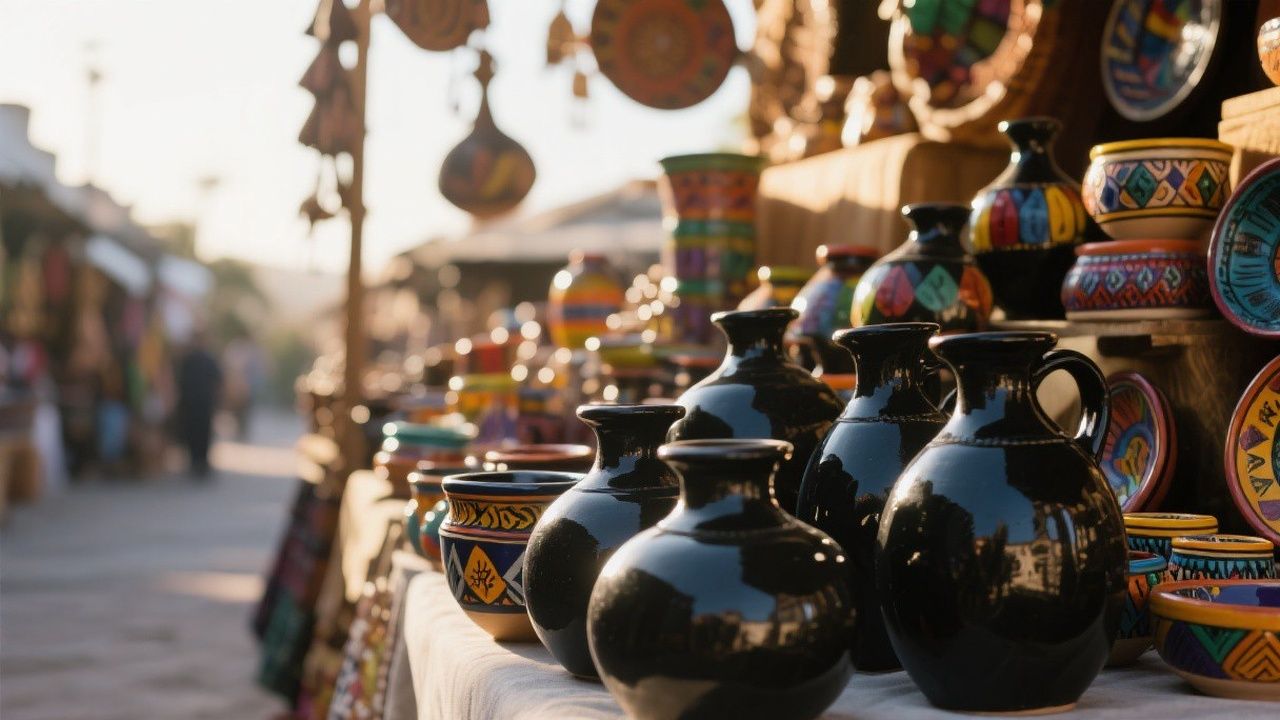
Bargaining in Moroccan souks is not optional; it is expected, and the initial price quoted to tourists is typically two to four times the fair price. But there is a difference between negotiating and lowballing. Starting at one-third of the asking price is reasonable for most goods. The vendor will act offended, counter with something slightly lower, and the dance begins. A good negotiation should feel like a conversation, not a confrontation.
I learned the hard way that the first vendor you encounter in any souk is almost never the best deal. Walk through the entire market, note prices, and compare quality before committing. In the Marrakech spice souk, I was quoted 400 dirhams for a kilogram of saffron at the first stall. By the fourth stall, the same quality saffron was 150 dirhams. The key is showing genuine interest, being willing to walk away, and never feeling pressured by the vendor's claim that "this is my last one" or "my father made this."
Pay attention to the atmosphere of the shop. Artisans who are genuinely proud of their work will often invite you to watch them work, explain their techniques, and show you their workshop. Tourist-trap vendors focus on pressure tactics: blocking doorways, grabbing your arm, and creating a false sense of urgency. The best Moroccan artisan products I have bought came from shops where the owner sat me down, served mint tea, and told me the story behind the craft before ever mentioning a price.
Moroccan Leather Goods
The leather tanneries of Fes are one of Morocco's most famous attractions, and the leather produced there is genuinely exceptional. The Chouara Tannery uses vegetable tanning methods that date back centuries, soaking hides in natural dyes made from pomegranate, indigo, saffron, and mint. The result is leather that is supple, durable, and develops a beautiful patina over time. A medium-sized messenger bag from a cooperative near the tannery costs 400 to 800 dirhams, depending on the leather type and complexity of the design.
The critical distinction is between vegetable-tanned leather (genuine Fes leather) and chrome-tanned leather (cheaper, mass-produced, often imported). Vegetable-tanned leather has a slightly uneven color, a natural grain pattern, and a distinctive earthy smell. Chrome-tanned leather is perfectly uniform, has a chemical smell, and cracks more easily over time. Ask the vendor directly which tanning method was used. Honest sellers will tell you proudly that their leather is vegetable-tanned. Evasive answers are a red flag.
Essaouira is another excellent city for leather shopping, with lower prices than Fes and Marrakech. The artisan cooperative near the port sells leather journals for 60 to 100 dirhams, belts for 80 to 150 dirhams, and sandals for 200 to 400 dirhams. The quality is consistently good because the cooperative structure means artisans are paid fairly and take pride in their work, rather than churning out volume for tourist deadlines.
Brass and Metalwork
Moroccan brass and metalwork is an underrated craft category that deserves more attention from visitors. The best pieces come from the copper artisans of Fes, who create stunning lanterns, trays, and teapots using hand-hammering and engraving techniques passed down through generations. A hand-engraved brass tray from Fes, measuring 40 centimeters across, costs 300 to 600 dirhams at a cooperative and makes a spectacular wall hanging or serving piece.
The way to spot genuine hand-engraved metalwork is to run your fingers over the surface. Real engraving has depth and texture; you can feel the grooves where the artisan carved the design. Printed or stamped designs are perfectly flat and uniform. Also check the back of the piece. Handmade trays often have slight hammer marks on the reverse side, while machine-made pieces are perfectly smooth on both sides.
For brass lanterns, which are one of Morocco's most iconic decorative items, expect to pay 200 to 800 dirhams depending on size and complexity. The small table lanterns with colored glass panels are 200 to 350 dirhams, while large floor-standing models with intricate filigree can reach 1,500 dirhams. The metalwork district in the Fes medina, just north of the Bou Inania Madrasa, has the best selection and the most reasonable prices I found anywhere in Morocco.
Essential Tips to Keep in Mind
- Visit artisan cooperatives rather than middleman shops. Cooperatives are marked with signs saying "Cooperative Artisanale" and offer fair prices with no pressure. The artisans receive a larger share of the proceeds, and the quality is consistently higher.
- Carry cash in small denominations. Vendors rarely have change for large bills, and haggling is much easier when you can physically count out the money.
- Take photos of items you like before buying. If a vendor claims an item is unique and you later see it in three other shops, you will know it is mass-produced.
- Be firm but polite when negotiating. Moroccan culture values respect and hospitality. Aggressive or rude bargaining will not get you a better price and may offend the vendor.
- Factor in shipping costs for large items like rugs and furniture. Many shops offer shipping, but get a written quote before purchasing. International shipping from Morocco typically costs 200 to 500 dirhams for a medium-sized carpet.
Frequently Asked Questions
Are Moroccan handicrafts actually cheaper in Morocco than online?
Significantly cheaper. A hand-knotted Berber rug that costs 2,000 to 5,000 dirhams in Morocco will sell for $500 to $2,000 in a Western import shop. Even after negotiation, you are paying a fraction of the retail price abroad.
How do I know if a Moroccan rug is authentic?
Look for slight irregularities in the pattern, visible knots on the back, and natural wool fibers. Authentic Berber rugs are never perfectly symmetrical. If the pattern is pixel-perfect and the back is covered with a fabric backing, it is almost certainly machine-made.
Is it safe to eat and drink at shops that offer mint tea during bargaining?
Yes. Mint tea is a standard part of Moroccan hospitality and is not a trick or obligation. Accept it graciously, enjoy the conversation, and remember that accepting tea does not obligate you to buy anything.
Final Thoughts
Morocco's handicrafts are among the finest in the world, and buying them directly from the artisans who make them is an experience that transforms a simple souvenir into a meaningful connection to the culture. Take the time to learn the difference between handmade and factory-made, visit cooperatives, and embrace the art of negotiation. The Moroccan artisan products you bring home will carry stories that no department store purchase ever could.