Peruvian Alpaca Products: A Complete Buying Guide
The first alpaca sweater I bought in Peru was from a market stall in Cusco for 80 soles, and it lasted exactly three washes before pilling into a fuzzy mess. The second one, which I bought from a cooperative in the Sacred Valley for 280 soles, is still in rotation four years later and looks almost new. The difference was not luck; it was understanding alpaca fiber quality grades, which most tourists never learn until after they have already wasted money on inferior products. Peru produces roughly 80 percent of the world's alpaca fiber, and the range of quality available is enormous. Here is what I wish someone had told me before my first shopping trip.
Custom Tailoring Options
One of the best-kept secrets in Peru is that you can have alpaca garments custom-made for a fraction of off-the-rack prices in Western countries. In Cusco, the area around Calle Choquechaka and the San Pedro market has dozens of small tailoring shops that will make a custom alpaca sweater, coat, or poncho from your choice of fabric in three to five days. I had a knee-length alpaca coat made at a shop called Centro de Textiles on Choquechaka for 350 soles ($95), using baby alpaca yarn that I selected from their stock. The fit was perfect, the quality was outstanding, and the entire process including two fittings took four days.
The process is straightforward. Bring a reference photo or describe what you want, choose your yarn or fabric, get measured, and return for fittings. Most shops charge 200 to 500 soles for a custom garment depending on the complexity and the quality of the fiber. A simple baby alpaca sweater costs 200 to 300 soles, while a full-length coat can run 400 to 700 soles. The key is choosing the shop carefully. Look for places that have been operating for years, have visible knitting or weaving on the premises, and are willing to show you the raw fiber before it is worked.
In Lima, the Miraflores district has several higher-end alpaca boutiques that offer custom tailoring with longer lead times and premium pricing. Kuna, a luxury alpaca brand with locations in Miraflores and San Isidro, offers custom pieces starting at 800 soles. The quality is exceptional, but you are paying a significant premium for the brand name and boutique experience. For the best value, stick with the Cusco workshops where the artisans themselves run the operation.
Pricing Guide by Quality

Alpaca fiber is sold in several quality tiers, and understanding the price ranges for each will save you from both overpaying and buying inferior products. The tiers, from lowest to highest, are: ordinary alpaca (simply called "alpaca"), baby alpaca, royal baby alpaca, and vicuna. Ordinary alpaca fiber is the most common and least expensive. A basic alpaca sweater in a Cusco market costs 60 to 150 soles ($16 to $40), and while it is warmer than wool, it can be coarse and prone to pilling.
Baby alpaca, which comes from the first shearing of an adult alpaca (not from baby animals, as many tourists assume), is significantly softer and finer. A baby alpaca sweater costs 200 to 400 soles ($55 to $110), and the difference in comfort is immediately apparent. Baby alpaca has a micron count of 20 to 22, compared to 26 to 30 for ordinary alpaca. Lower micron counts mean softer fiber. Royal baby alpaca, with a micron count below 20, is the softest grade widely available and costs 400 to 800 soles for a sweater. It is extraordinarily soft, comparable to cashmere, and significantly more durable.
Vicuna, the rarest and most expensive natural fiber in the world, is in a category of its own. A vicuna scarf costs 2,000 to 5,000 soles ($550 to $1,400), and a sweater can exceed 10,000 soles. Vicuna fiber has a micron count of 12 to 14, making it the finest of all natural fibers. It is beautiful, but for most travelers, baby alpaca or royal baby alpaca offers the best balance of quality and value.
Baby Alpaca Quality Grades
The term "baby alpaca" is loosely regulated in Peru, and many market vendors apply it liberally to products that contain only a small percentage of actual baby alpaca fiber. A sweater labeled "baby alpaca" should contain at least 90 percent baby alpaca fiber, but in practice, many tourist-market products contain 30 to 50 percent baby alpaca blended with ordinary alpaca, wool, or even synthetic fibers. The price is usually the giveaway: a genuine baby alpaca sweater for 80 soles is almost certainly not pure baby alpaca.
To verify quality, do the touch test. Genuine baby alpaca feels silky smooth with no scratchiness whatsoever. Rub it against your neck or the inside of your wrist; if it feels even slightly prickly, it is not pure baby alpaca. Also check the label. Peruvian law requires textile products to list fiber content, though enforcement in informal markets is inconsistent. Look for labels that specify "90 percent baby alpaca" or higher, ideally with the micron count listed.
The best place to buy verified baby alpaca products is at government-certified artisan centers like the Centro de Textiles Tradicionales del Cusco, a nonprofit cooperative that works with weavers from surrounding communities. Every product here comes with a detailed label listing fiber content, origin, and the name of the weaving community. Prices are fair and fixed (no bargaining), with baby alpaca scarves starting at 120 soles and sweaters at 250 soles. The quality is consistently excellent, and your purchase directly supports the weaving communities.
Types of Alpaca Products
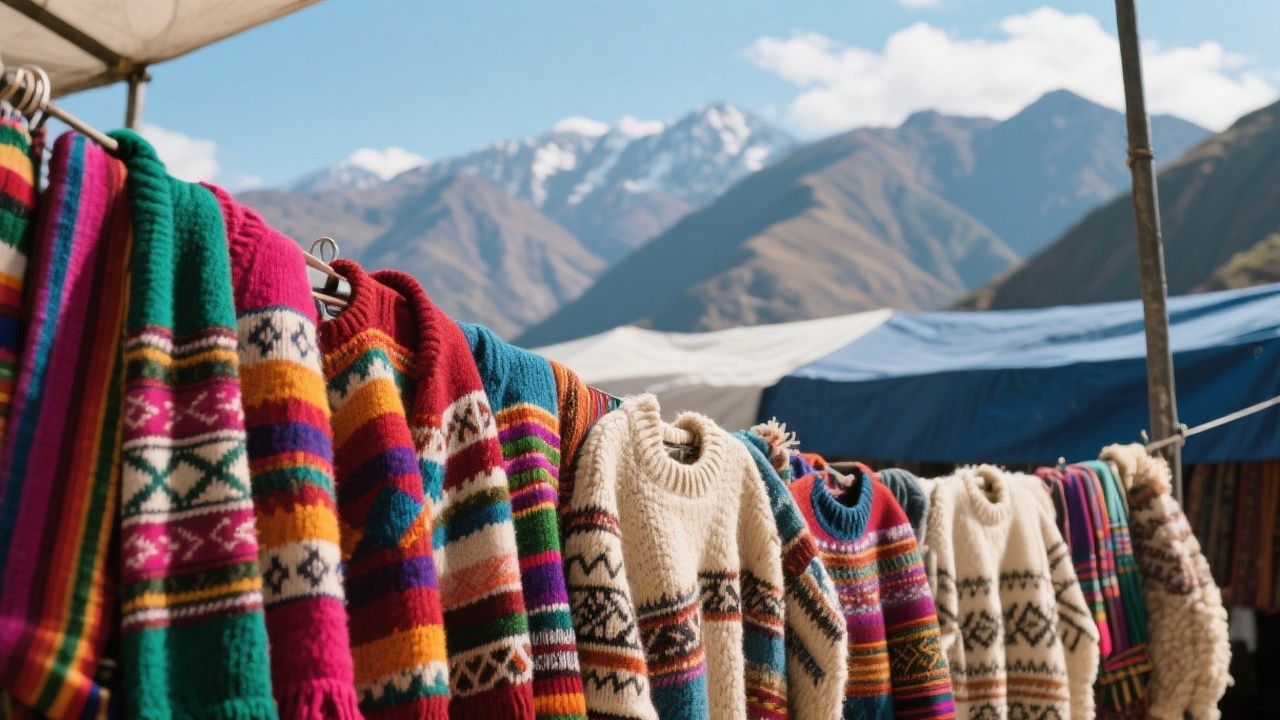
Beyond sweaters and scarves, Peru produces an enormous range of alpaca products, and some of the best values are in categories that many tourists overlook. Alpaca socks, for example, are one of the most practical purchases you can make. A pair of baby alpaca socks costs 25 to 50 soles in Cusco markets, and they are warmer, softer, and more moisture-wicking than any wool or cotton sock I have ever worn. I buy 10 to 15 pairs every trip and they last for years with proper care.
Alpaca blankets and throws are another excellent buy. A full-size baby alpaca throw blanket costs 300 to 600 soles ($80 to $160) and makes a luxurious gift or home accessory. The best selection is at the Pisac market in the Sacred Valley, where artisans from surrounding communities sell directly. I bought a queen-size throw with traditional Andean patterns for 450 soles, and it is the most-used item in my living room.
For something truly unique, look for alpaca toys and accessories. Hand-knitted alpaca finger puppets, sold in sets of 10 to 20 for 30 to 60 soles, are charming, affordable gifts that support indigenous communities. Alpaca hats, gloves, and chullos (Andean ear-flap hats) cost 40 to 120 soles and are both functional and beautiful. The key is buying from cooperatives or markets where the artisans are present, rather than from shops that import mass-produced items.
Essential Tips to Keep in Mind
- Always check the fiber content label. If there is no label, ask the vendor directly what percentage is baby alpaca. If they cannot or will not answer, assume it is ordinary alpaca or a blend.
- Wash alpaca products in cold water with a gentle detergent, and lay them flat to dry. Never put alpaca in a dryer, as heat and agitation will shrink and damage the fiber.
- Buy from cooperatives and artisan centers whenever possible. The prices are only slightly higher than market stalls, and the quality and ethical sourcing are guaranteed.
- Store alpaca garments folded, not hung, to prevent stretching. Use cedar blocks or lavender to deter moths, which are attracted to natural animal fibers.
- Budget 300 to 800 soles ($80 to $220) for a quality baby alpaca sweater, and 100 to 300 soles for scarves and accessories. These are fair prices that support artisans while offering exceptional value.
Frequently Asked Questions
Is alpaca warmer than wool?
Yes, significantly. Alpaca fiber has hollow cores that trap heat more effectively than solid wool fibers. It is also lighter, softer, and less itchy than sheep's wool, and it is hypoallergenic because it does not contain lanolin.
Can I bring alpaca products back through customs without issues?
Yes. Alpaca fiber is a processed textile product and faces no import restrictions in the US, EU, UK, Canada, or Australia. No special documentation is required for personal-use quantities.
How do I know if an alpaca product is ethically made?
Look for products sold through certified cooperatives like the Centro de Textiles Tradicionales del Cusco or fair trade certified shops. These organizations ensure fair wages, safe working conditions, and community investment. Avoid products with suspiciously low prices, which often indicate exploitative labor practices.
Final Thoughts
Peruvian alpaca products are one of the great textile values in the world. A baby alpaca sweater that costs $80 in Cusco would easily sell for $250 or more in a Western boutique. Buy from cooperatives, understand the quality grades, and invest in pieces that will last for years. The warmth, softness, and beauty of genuine Peruvian alpaca wool are impossible to replicate, and once you experience the real thing, you will never go back to synthetic alternatives.