How to Avoid Tourist Traps in Paris and Experience the Real City
I've been visiting Paris regularly for 12 years, and I've watched the same cycle repeat: friends fly in, eat at restaurants near the Eiffel Tower, buy souvenirs on Rue Cler, take a Seine river cruise that costs 16 euros, and come home saying Paris was "nice but overrated." Paris isn't overrated -- the version of Paris most tourists see is. The real city, the one Parisians actually live in, is vibrant, affordable, and completely different from the postcard version. Here's how to find it, based on years of exploring arrondissements that most visitors never reach.
Overpriced Areas to Skip
The area immediately surrounding the Eiffel Tower (7th arrondissement, specifically Rue Cler and the streets between the tower and Ecole Militaire) is the most overpriced dining zone in Paris. A croque monsieur that costs 8 euros in a normal neighborhood costs 16-22 euros here. A glass of wine that's 5 euros at a local bar is 12-15 euros at a terrace with a tower view. The food isn't bad -- it's just aggressively mediocre at premium prices. The same pattern applies to the Champs-Elysees, where chain restaurants (Laduree excepted) serve forgettable food to tourists who don't know better. A meal at a Champs-Elysees cafe will cost 25-40 euros per person for what's essentially cafeteria-quality food.
The Latin Quarter near Notre-Dame has degraded significantly over the past decade. Once the intellectual heart of Paris, the main streets now feature touts aggressively pushing you into tourist restaurants with laminated menus in five languages and photos of the dishes. These restaurants survive entirely on foot traffic from tourists who don't know any better. The food is reheated, overpriced (15-25 euros for a plat du jour that costs 12 euros elsewhere), and the experience has zero connection to real Parisian dining culture. Walk one block off the main drags -- onto Rue Mouffetard or Rue Lhomond -- and the quality improves dramatically.
Montmartre's main square, Place du Tertre, is another tourist trap to approach with caution. Portrait artists charge 60-100 euros for a 15-minute sketch, and the surrounding cafes charge double what you'd pay elsewhere. Montmartre itself is worth visiting -- the Sacre-Coeur views are stunning and the winding streets are beautiful -- but eat and drink on the side streets, not the square. Walk down to Rue des Abbesses for authentic, affordable bistros where locals actually eat.
Authentic Neighborhood Recommendations
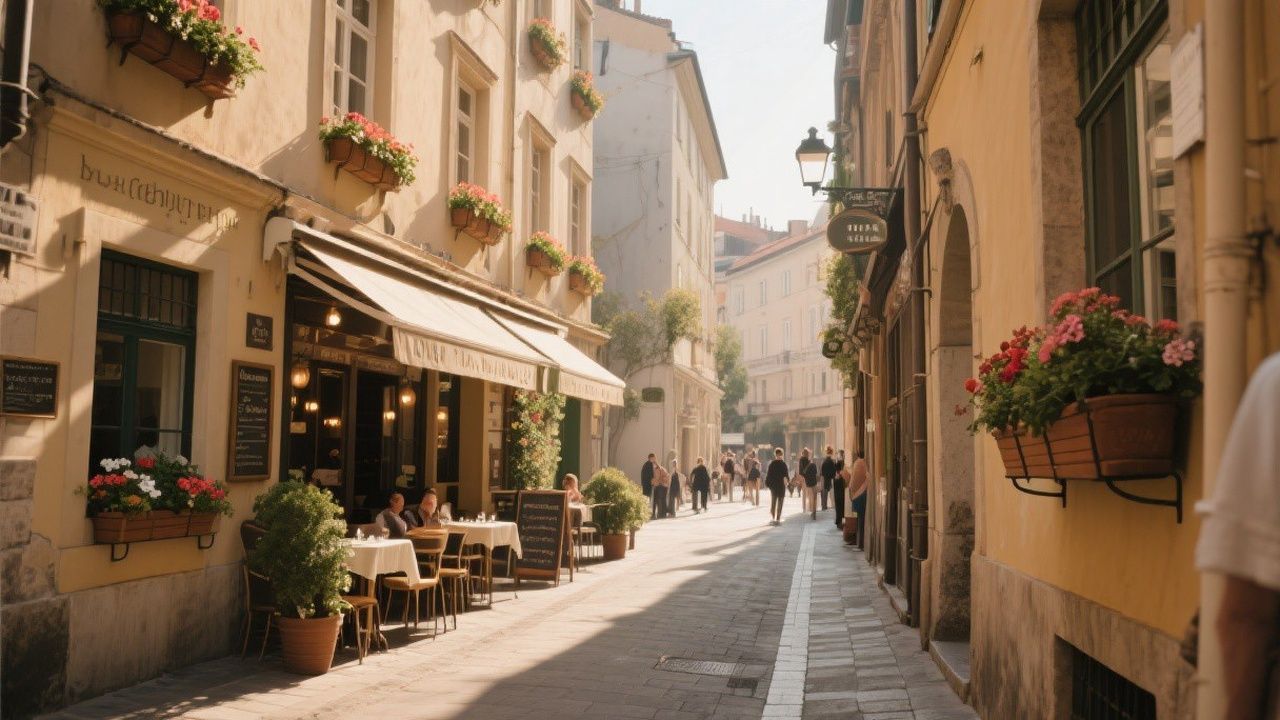
The 11th arrondissement is where many young Parisians actually spend their time, and it's the best neighborhood for visitors who want to experience contemporary Paris. The stretch of Rue Oberkampf between Voltaire and Parmentier is packed with natural wine bars, independent bookshops, and restaurants that haven't been discovered by guidebook writers yet. Le Servan, a Franco-Asian bistro on Rue Saint-Maur, serves some of the most exciting food in Paris at prices that won't make you wince (lunch menus from 19 euros, dinner from 35 euros). Further east, the Rue de la Roquette has a cluster of excellent Vietnamese restaurants -- my favorite is Pho 14, where a massive bowl of pho costs 13 euros and the line of local Vietnamese customers confirms its authenticity.
Canal Saint-Martin, running through the 10th arrondissement, is the neighborhood that feels most like "real Paris" to me. On a Sunday afternoon, locals gather along the canal with wine and cheese, the iron footbridges are photogenic without being crowded, and the bars and cafes along Quai de Valmy serve drinks at normal prices (a draft beer for 5-6 euros instead of 10-12 in tourist areas). Holybelly, a brunch spot on Rue Lucien Sampaix, is genuinely worth the 30-45 minute wait -- the pancakes are the best in Paris, and the Australian-French owners have created a space that feels like a neighborhood institution rather than a tourist destination.
The 20th arrondissement, specifically the area around Menilmontant and Belleville, is Paris's most diverse and least touristy neighborhood. Rue de Belleville is lined with North African bakeries, Chinese dumpling shops, and French cafes existing side by side. Le Baratin, a tiny wine bar on Rue Jouye-Rouve, offers one of the best dining experiences in Paris -- no reservations, a handwritten menu that changes daily, and a three-course meal with wine for about 40 euros. The nearby Parc de Belleville has an elevated view of the Eiffel Tower that rivals the view from Montmartre, with a fraction of the crowds.
Off-the-Beaten-Path Attractions
Instead of the Louvre (where you'll spend three hours fighting crowds to see the Mona Lisa from 20 meters away), visit the Musee de l'Orangerie in the Tuileries Garden. Monet's Water Lilies are displayed in two oval rooms designed specifically for the paintings, and the experience is immersive in a way that the Louvre's crowded galleries can never be. Entry is 12.50 euros, and you can see the entire museum in 90 minutes without feeling rushed. The Musee Marmottan Monet in the 16th arrondissement has the largest Monet collection in the world and receives a fraction of the Louvre's visitors. It's located in a beautiful mansion in a quiet residential neighborhood, and entry is 14 euros.
For something completely different, explore the Promenade Plantee (also called Coulée Verte), an elevated park built on an abandoned railway viaduct that predates New York's High Line by 16 years. It runs for 4.7 kilometers through the 12th arrondissement, from the Bastille opera house to the Bois de Vincennes, and offers a peaceful, green perspective on the city that most tourists never see. Entrance is free, and the walk takes about 90 minutes at a leisurely pace. The Viaduc des Arts -- the arched brick structures beneath the park -- house artisan workshops, galleries, and furniture makers that are fascinating to browse.
The Paris Catacombs are worth visiting but book online weeks in advance to skip the notorious 2-3 hour queue. Entry is 16 euros with a timed reservation. For a less crowded underground experience, the Sewers Museum (Musee des Egouts de Paris) near the Pont de l'Alma is genuinely fascinating and receives far fewer visitors. Entry is 11 euros, and you'll walk through actual working sewer tunnels that have been partially opened to the public since 1867. It sounds unappealing, but it's one of the most unique attractions in Paris and provides a completely different perspective on the city's infrastructure.
Coffee and Cafe Culture
Parisian coffee culture has undergone a revolution over the past decade, and the city now has a specialty coffee scene that rivals London or Melbourne. The old guard of Parisian cafes (Cafe de Flore, Les Deux Magots) charges 6-8 euros for an espresso and survives entirely on its literary reputation. The new wave offers better coffee at lower prices. Telescope, on Rue Villedo in the 2nd arrondissement, serves some of the best espresso in Paris for 3.50 euros. Fondation Coffee in the Sentier neighborhood has a rotating selection of single-origin beans and a minimalist space that feels more Copenhagen than Paris. Ten Belles, near Canal Saint-Martin, is a local favorite that also sells excellent pastries.
For the classic Parisian cafe experience without the tourist markup, find a cafe on a residential street in the 11th, 12th, or 20th arrondissement. A cafe noisette (espresso with a dash of milk) costs 1.50-2.50 euros at a neighborhood cafe, compared to 4-6 euros at a tourist-area establishment. The key is to sit at the counter (le comptoir) rather than at a terrace table -- terrace seating always carries a premium, sometimes 50-100% more than the bar price. Sitting at the counter is also more social: you'll be shoulder-to-shoulder with locals reading Le Monde, chatting with the bartender, and watching the neighborhood pass through the door.
Parisian cafe culture has unwritten rules that tourists often miss. Don't order a cappuccino after 11 AM -- it's considered a breakfast drink, and ordering one at 3 PM will mark you as a tourist. A noisette or a cafe creme (the French equivalent of a latte) is the appropriate afternoon order. Don't ask for your food to be modified -- Parisian chefs don't do substitutions, and requesting changes to a dish is considered rude. Do say "bonjour" when you enter and "merci, au revoir" when you leave -- these greetings are mandatory in French culture and skipping them will result in noticeably worse service.
Essential Tips to Keep in Mind
- Eat lunch instead of dinner at nice restaurants. Most Parisian bistros offer a formule dejeuner (lunch set menu) for 15-22 euros that includes a starter, main, and sometimes dessert. The same meal at dinner costs 35-50 euros. The food is identical -- only the price changes.
- Use the Navigo Semaine pass for unlimited metro, bus, and RER travel within zones 1-3. It costs 30 euros for a weekly pass (Monday to Sunday) and pays for itself in 4-5 trips. Buy it at any metro station with a passport photo.
- Shop at local markets instead of tourist-oriented food shops. The Marche d'Aligre in the 12th arrondissement has excellent produce, cheese, and wine at prices 30-50% below what you'll pay at Rue Cler or the Marais markets.
- Visit museums on the first Sunday of the month when many are free. The Musee d'Orsay, Musee de l'Orangerie, and Centre Pompidou all offer free entry on the first Sunday, though arrive early to avoid the crowds.
- Walk. Paris is a remarkably walkable city -- 15 kilometers of walking in a day is normal for a Parisian. The best discoveries happen between destinations, in the small streets and quiet squares that don't appear on any map.
Frequently Asked Questions
Is Paris actually expensive, or is it just tourist pricing?
Paris is expensive for tourists who stay in the 1st-8th arrondissements, eat at tourist restaurants, and visit paid attractions daily. For travelers who stay in the 11th, 12th, 19th, or 20th arrondissements, eat at neighborhood bistros, and take advantage of free attractions (parks, markets, churches, walking tours), a daily budget of 80-120 euros per person is entirely realistic. That's less than a day in London or Zurich.
Do I need to speak French?
No, but making an effort matters enormously. Parisians have a reputation for being rude to tourists who don't speak French, but the reality is more nuanced: they're rude to tourists who don't say "bonjour" before asking a question. Learn five phrases -- bonjour, merci, s'il vous plait, au revoir, and pardon -- and use them consistently. After that, most Parisians will switch to English willingly and helpfully. The stereotype of the rude Parisian is largely a product of tourists skipping basic courtesy, not a genuine cultural trait.
What's the best way to get around Paris?
The metro is the fastest and cheapest option. A single ticket costs 2.15 euros, and the system covers every neighborhood a tourist would want to visit. Walking is the best way to explore -- Paris is compact, and the distances between attractions are shorter than they appear on maps. For distances over 3-4 kilometers, the metro is more practical than walking. Taxis and Ubers are expensive and often slower than the metro due to traffic. Avoid the hop-on-hop-off buses -- they're overpriced (35 euros per day), slow, and cover routes you can walk faster.
Final Thoughts
The hidden gems Paris offers aren't really hidden -- they're just one block off the main tourist path. The city's authentic culture thrives in neighborhood cafes, local markets, and residential streets that most visitors walk past on their way to the next famous monument. Avoiding tourist traps in Paris isn't about deprivation -- it's about redirection. Skip the 20-euro crepe near Notre-Dame and eat a 3-euro falafel on Rue des Rosiers instead. Skip the 16-euro Seine cruise and walk along the canal for free. The authentic Paris travel experience isn't harder to find than the tourist version -- it's just in a different direction. Walk that way, and you'll discover why Parisians never want to leave their city.