The Best Travel Apps You Need in 2025: Our Top 25 Picks
I travel with roughly 40 apps on my phone, but only about a dozen of them earn their storage space on every single trip. The rest are destination-specific tools I download when needed and delete when I get home. After years of testing, deleting, and reinstalling what feels like every travel app ever built, I've narrowed the field to 25 that genuinely make travel better. These essential travel apps cover everything from navigating foreign cities to translating menus to finding the cheapest flights, and I use them in real situations, not just in theory.
Navigation and Maps Apps
Google Maps remains the most important travel app on my phone, but it's the offline features that make it indispensable. Before any trip, I download the offline map for my destination by searching for the city name, tapping the name at the bottom, and selecting "Download offline map." This gives me full navigation, search, and business information even without cell service, which has saved me repeatedly in places like rural Portugal and the Tokyo subway system where cell signal drops between stations.
Maps.me is my backup navigation app and often outperforms Google Maps for hiking trails and off-road routes. It uses OpenStreetMap data, which means the detail level varies by region but is often more comprehensive in rural areas where Google's coverage is thin. I used Maps.me extensively in the Peruvian Andes and found hiking trails that Google Maps didn't even show. Citymapper is the single best app for public transit in major cities, covering about 80 cities worldwide with real-time arrival times, delay alerts, and step-by-step directions including walking segments and transfer points.
Translation Apps

Google Translate has improved dramatically and now handles 130+ languages with surprisingly natural-sounding voice output. The feature I use most is the camera translation, which overlays translated text on signs, menus, and documents in real time through your phone's camera. This has been a game-changer in Japan, where restaurant menus are often entirely in Japanese. Download the language packs for offline use before your trip, as the camera translation feature requires them.
DeepL is the app I reach for when accuracy matters more than convenience. While Google Translate handles more languages, DeepL produces noticeably more natural translations for European languages, particularly French, German, Spanish, Italian, and Dutch. Papago, developed by Naver, handles Korean, Japanese, Chinese, and Vietnamese far better than Google Translate in my experience, particularly for conversational phrases and slang. It's free, works offline with downloaded language packs, and includes a useful phrasebook organized by common travel situations.
Itinerary Planning Apps
Wanderlog has become my go-to itinerary planning app over the past two years, replacing a messy collection of Google Docs. It lets you build day-by-day itineraries with flight details, hotel reservations, restaurant bookmarks, and activity plans all in one place. The best feature is the collaborative function, which lets travel companions edit the same itinerary in real time. I used it for a group trip to Japan with four people, and having everyone add restaurant suggestions in a single app eliminated the endless group text chaos.
TripIt takes a different approach by automatically building your itinerary from confirmation emails. Forward your flight, hotel, and restaurant booking emails to [email protected], and the app assembles them into a master itinerary organized chronologically. Rome2Rio is the app I use for figuring out how to get from point A to point B when the route isn't obvious. It searches flights, trains, buses, ferries, and driving routes simultaneously, displaying estimated travel times and costs on a single results page.
Accommodation Booking Apps
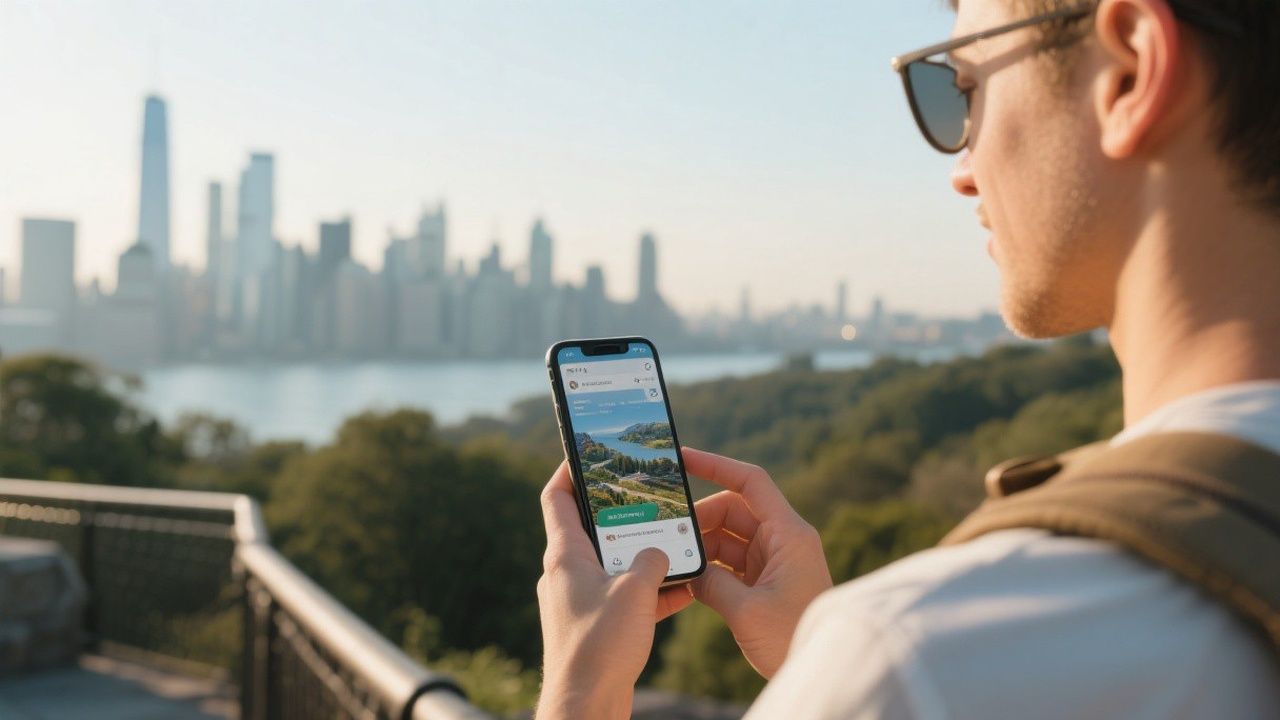
Booking.com remains the most comprehensive accommodation booking platform, with over 28 million listings worldwide. Its strength is the breadth of options, from luxury hotels to hostels to apartments, and the free cancellation on most properties provides flexibility. I use it as my primary search tool and then cross-reference prices on Hotels.com (which offers a rewards program with every 10th night free) and directly with the property.
Hostelworld is the definitive app for hostel bookings and has improved significantly. It now includes verified reviews, detailed photos, and a social feature that lets you see who else is staying at the same hostel during your dates. For longer stays, Airbnb and Vrbo offer apartment and house rentals that provide better value than hotels for trips of a week or more. I've found apartments in Lisbon for EUR 60 per night that would cost EUR 120+ for a comparable hotel room, plus the kitchen access saves significantly on meal costs.
Essential Tips to Keep in Mind
- Download offline maps and translation packs before you leave home, as hotel WiFi is often too slow for large downloads.
- Don't rely on a single app for any critical function; always have a backup for navigation, translation, and communication.
- Check app reviews in the App Store or Google Play before downloading, as travel apps frequently update and sometimes introduce bugs.
- Use airplane mode to prevent apps from consuming data in the background while traveling internationally.
- Organize your travel apps into a dedicated folder on your home screen for quick access.
Frequently Asked Questions
Are paid travel apps worth the cost?
Most travelers can get by with free versions of the apps listed here. The paid upgrades are worth it for frequent travelers: TripIt Pro is valuable if you fly more than a few times per year, Wanderlog Pro is worth it for complex multi-city trips, and DeepL Pro makes sense if you regularly translate professional documents while traveling.
Do these apps work offline?
Google Maps, Maps.me, Google Translate, DeepL, and Papago all offer offline functionality after you download the necessary data packs. Booking and itinerary apps require internet access by nature. I recommend downloading all offline content before departure and testing it in airplane mode.
What's the single most important travel app?
Google Maps, without question. The combination of navigation, offline maps, business reviews, transit directions, and real-time traffic makes it the one app I would keep if I could only have one. It has replaced standalone transit apps, city guides, and restaurant recommendation apps for most of my travel needs.
Final Thoughts
The best travel app setup is the one that works for your specific travel style. A backpacker bouncing through Southeast Asia needs different tools than a business traveler flying between European capitals. Start with the core apps: Google Maps, Google Translate, and your preferred booking platform. Then add specialized tools as you identify gaps in your travel workflow. The goal isn't to download every app recommended here but to build a toolkit that solves real problems you encounter on the road.