Budget Travel in Thailand: How to Explore on $30 a Day
I lived in Thailand for four months on a budget that averaged $28 per day, and I didn't skip a single thing I wanted to do. I ate street food in Bangkok, island-hopped in the Andaman Sea, rode elephants (ethically, at the Elephant Nature Park), and spent weeks exploring the north. The secret isn't deprivation -- it's knowing exactly where your money goes furthest and where it gets wasted. Budget travel in Thailand is entirely possible, but only if you understand the gap between what tourists typically spend and what locals and experienced backpackers actually pay.
Cheapest Accommodation Options
Hostels in Thailand are absurdly cheap by Western standards, and the quality has improved dramatically over the past decade. In Chiang Mai, a dorm bed at Stamps Backpackers costs 180 baht ($5) per night and includes free toast, coffee, and a rooftop social area. In Bangkok, the Lub d chain offers clean, modern dorms starting at 350 baht ($10) -- more expensive, but you're paying for location on Sukhumvit Road, walking distance to the BTS Skytrain. In the islands, prices jump: a dorm on Koh Phi Phi runs 400-600 baht ($11-17), and a basic private bungalow on Koh Lanta starts at 500 baht ($14) in low season.
The real savings come from guesthouses and local hotels found on Agoda rather than Booking.com. Agoda dominates the Thai market and often has exclusive rates 20-30% below other platforms. I've stayed in private rooms with air conditioning and hot water in Pai for 350 baht ($10) booked through Agoda -- the same room listed on Booking.com for 550 baht. In smaller towns like Kanchanaburi and Sukhothai, family-run guesthouses charge 300-500 baht ($8-14) for a clean private room with a fan. Fan rooms are perfectly fine from November through February when nighttime temperatures drop to 18-22 degrees Celsius.
For longer stays (a week or more), negotiate directly. Walk into a guesthouse, ask about weekly rates, and you'll typically get 30-40% off the nightly price. In Chiang Mai's Nimmanhaemin neighborhood, I paid 6,000 baht ($170) for an entire month in a studio apartment with air conditioning and Wi-Fi by negotiating a monthly rate directly with the building manager. That's $5.60 per night for a private apartment -- cheaper than any dorm bed in the city.
Avoiding Tourist Traps
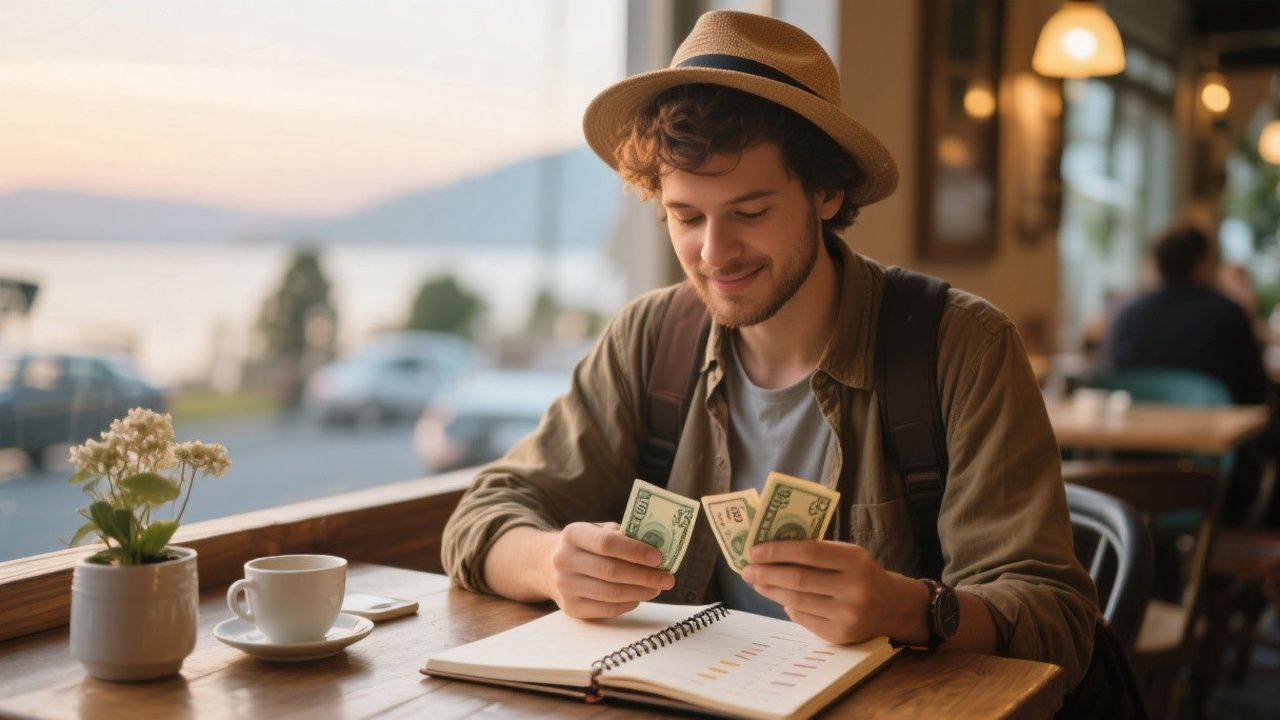
The biggest budget killer in Thailand is paying tourist prices for things that cost a fraction locally. The Full Moon Party on Koh Phangan is a prime example: entrance is free, but a bucket of mixed spirits costs 300-500 baht ($8-14) on the beach, compared to 150 baht at a 7-Eleven for the same alcohol. Pre-game at a convenience store and you'll cut your drinking budget in half. Similarly, the famous floating markets near Bangkok -- Damnoen Saduak and Khlong Lat Mayom -- charge tourists 2,000-3,000 baht ($55-85) for longtail boat tours. Take a local bus to Amphawa Floating Market instead, where you can wander for free and eat excellent food for under 200 baht.
Tuk-tuks in Bangkok are the most notorious tourist trap in the country. A ride from Khao San Road to the Grand Palace should cost 60-80 baht, but drivers routinely quote 200-500 baht to tourists. Use the Grab app (Southeast Asia's Uber equivalent) instead -- the same ride costs 50-70 baht, the price is fixed, and you won't be taken on a "detour" to a gem shop where the driver earns a commission. In Chiang Mai, Songthaews (red trucks) charge a flat 30 baht per person for rides within the old city. If a driver quotes more, walk away -- another one will come along in two minutes.
Tour packages sold through hotel desks are almost always overpriced. A Phi Phi Island day trip booked through your hotel in Phuket might cost 2,500 baht ($70), but the same trip booked directly at Chalong Pier costs 1,200-1,500 baht ($33-42). The boats are identical, the itinerary is the same, and you're cutting out the middleman. I book tours through local operators found on GetYourGuide or directly at pier offices, which saves 40-50% consistently.
Free and Cheap Activities
Some of Thailand's best experiences cost nothing at all. In Bangkok, walking through Chinatown (Yaowarat Road) at night is free and more exciting than most paid attractions. The street food scene there is legendary -- char siu pork at T&K for 80 baht, mango sticky rice at any cart for 60 baht, and fresh coconut ice cream for 40 baht. In Chiang Mai, the Sunday Walking Street market stretches from Tha Phae Gate to Wat Phra Singh and is free to explore. You can spend three hours browsing handmade crafts, watching live music, and eating your way through dozens of food stalls for under 300 baht total.
Thailand's temples are either free or charge a nominal fee for foreigners. Wat Pho in Bangkok (home of the reclining Buddha) charges 200 baht ($5.50) and is worth every satang. Wat Chedi Luang in Chiang Mai is free. In Ayutthaya, the ancient temple ruins charge 10-50 baht each ($0.30-1.40), and you can rent a bicycle for 50 baht per day to explore the entire historical park. The total cost for a full day in Ayutthaya -- including transport from Bangkok (train: 20 baht), bicycle rental, temple entry fees, and food -- comes to roughly 500 baht ($14).
National parks in Thailand charge foreigners 300 baht ($8.40) per entry, which sounds steep but covers a full day of hiking, waterfalls, and wildlife spotting. Khao Yai National Park, a two-hour drive from Bangkok, is home to gibbons, hornbills, and elephants in the wild. Doi Inthanon National Park in Chiang Mai has Thailand's highest peak and stunning waterfalls. Both offer experiences that rival anything you'd pay $50-100 for in a Western national park.
Money-Saving Apps and Tools
Grab is the single most important app for budget travel in Thailand. It handles rides, food delivery, and even grocery shopping, and the prices are always lower than negotiating with street taxis. For intercity travel, the 12Go Asia app compares bus, train, and flight prices across operators -- I've found overnight VIP bus tickets from Bangkok to Surat Thani for 650 baht ($18) that I never would have discovered otherwise. The Navi app provides offline GPS navigation, which is essential when you're wandering through Chiang Mai's old city or Bangkok's back sois without mobile data.
For currency exchange, avoid airport booths and hotel counters, which offer rates 5-10% below the real exchange rate. Use SuperRich (with the orange sign) in Bangkok, which consistently offers the best rates in the country -- typically only 0.1-0.3 baht below the mid-market rate. In other cities, compare rates at exchange booths near major shopping malls rather than at tourist hotspots. I track rates on the XE Currency app and only exchange when the booth rate is within 0.5 baht of the mid-market rate.
Food delivery apps like Line Man and Foodpanda sometimes offer promotional discounts of 30-50% off restaurant meals, which can make ordering from a proper restaurant cheaper than eating at a tourist-oriented street stall. I've ordered full meals from local Thai restaurants in Bangkok for 80-120 baht ($2.20-3.30) using Line Man promotions -- that's pad thai with shrimp, a side of som tum, and a Thai iced tea delivered to my door.
Essential Tips to Keep in Mind
- Eat where locals eat. A plate of khao man gai (chicken rice) at a local shop costs 40-50 baht ($1.10-1.40), while the same dish at a tourist restaurant costs 120-180 baht. Look for places with plastic stools, Thai-language menus, and a crowd of local office workers at lunchtime.
- Travel overnight to save on accommodation. VIP buses from Bangkok to Chiang Mai (about 10 hours) cost 800-1,000 baht ($22-28) and include a reclining seat, blanket, and bottle of water. You arrive rested and save a night's hotel cost.
- Drink the water from large refill stations (RO water) found at 7-Eleven and most guesthouses for 1-3 baht per liter. A reusable bottle pays for itself within two days.
- Visit during shoulder season (March-May for the north, September-October for the south). Accommodation prices drop 30-50%, crowds thin out, and the weather is manageable if you plan around midday heat.
- Always carry cash in small denominations. Street vendors, tuk-tuk drivers, and small guesthouses often can't break 1,000-baht notes.
Frequently Asked Questions
Is $30 a day realistic for Thailand in 2025?
Yes, but with caveats. That budget works in the north (Chiang Mai, Pai, Chiang Rai) and on the Gulf islands (Koh Samui, Koh Phangan) during low season. In Phuket, Koh Phi Phi, and central Bangkok, expect to spend $35-45 per day. The $30 figure assumes dorm accommodation ($5-10), street food ($8-12), local transport ($2-4), and one paid activity per day ($3-8). It's a backpacker budget, not a flashpacker one.
Do I need to tip in Thailand?
Tipping is not expected in Thailand, and many restaurants will chase you down the street to return change you left on the table. At massage parlors, rounding up to the nearest 100 baht is appreciated but not required. At hotels that cater to Western tourists, a 20-50 baht tip for housekeeping is a nice gesture. Don't tip tuk-tuk drivers or street food vendors -- it's not part of the culture and can feel awkward.
Is Thailand still cheap compared to Vietnam or Cambodia?
Thailand is slightly more expensive than Vietnam and Cambodia for food and accommodation, but the infrastructure, safety, and ease of travel are significantly better. Street food in Vietnam averages 30-50% less than Thailand, but getting around Vietnam is slower and more complicated. For a first-time visitor to Southeast Asia, Thailand's combination of affordability and convenience makes it the best starting point.
Final Thoughts
Thailand backpacking on a tight budget isn't about suffering -- it's about spending your money on experiences that matter and cutting costs on things that don't. A $2 bowl of boat noodles at a Bangkok street stall tastes better than a $20 meal at a tourist restaurant. A $5 dorm bed in Chiang Mai puts you in the middle of the city's best nightlife. A $14 train ticket delivers you to ancient ruins that rival Angkor Wat without the crowds. The Thailand backpacking budget works because the country's incredible value isn't a secret -- it's just that most tourists never bother to look past the hotel tour desk and the tuk-tuk driver's first quote.