How to Cook Thai Street Food at Home: 5 Authentic Recipes
The first time I tried to make pad thai at home in my tiny London kitchen, the result was a sticky, clumpy disaster. Then I spent two weeks at a cooking school in Chiang Mai called Asia Scenic, and the instructor, a grandmother named Auntie Orn, showed me that the problem wasn't my equipment. It was my technique and my understanding of how Thai flavors work together. Since that course, I've been recreating Thai street food recipes in my home kitchen for years. The recipes below are the ones I've refined over dozens of attempts.
Essential Thai Ingredients
Before you cook a single dish, stock your pantry with the foundational ingredients of Thai cuisine. Fish sauce is the backbone, providing salt and umami. I use Three Crabs brand, about $3 to $4 per bottle. Palm sugar is another essential; unlike white sugar, it has a caramel-like complexity. It comes in solid blocks or jars of soft paste. I prefer the paste form from Aroy-D brand ($5 per jar) because it's easier to measure.
Coconut milk, tamarind paste, Thai bird's eye chilies, galangal, lemongrass, kaffir lime leaves, and Thai basil complete the core list. For fresh herbs, I buy them in bulk and freeze them; they last for months. The ingredient that makes the biggest difference is toasted rice powder. It adds a smoky, nutty dimension to larb and som tum. You can buy it pre-made for about $4 per bag, but making it at home takes 10 minutes and tastes significantly better.
Wok Cooking Techniques
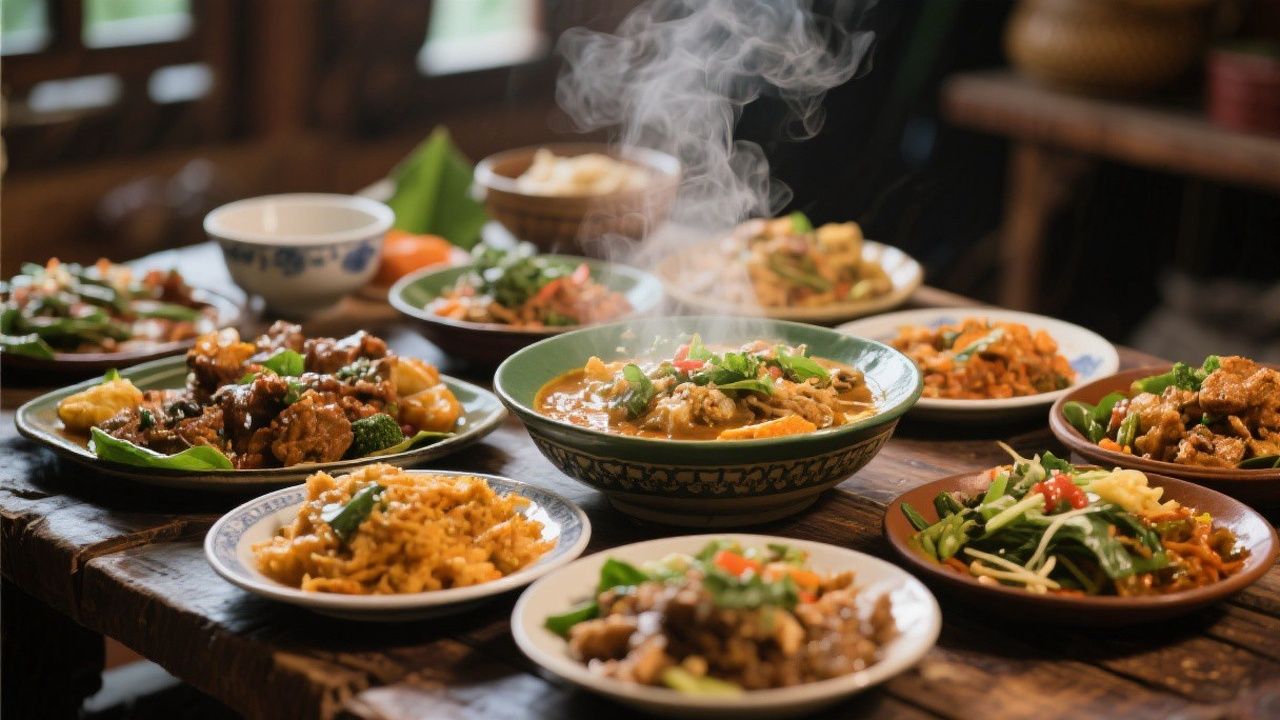
The single most important technique in Thai cooking is high-heat stir-frying, and it's where most home cooks fail. Thai street food vendors cook over massive gas burners. Your home stove produces a fraction of that heat. First, preheat your wok for at least 3 minutes before adding oil. The wok should be smoking slightly when you add ingredients. Second, cook in very small batches. A street vendor cooking pad thai for one customer uses one serving of noodles, one egg, and a handful of bean sprouts. At home, trying to cook two servings at once crowds the wok and drops the temperature, resulting in steamed rather than fried food.
Mise en place is non-negotiable. Thai cooking happens fast, and you won't have time to measure sauces once the wok is hot. Prepare every ingredient and arrange everything in small bowls within arm's reach before you turn on the stove. The entire cooking process for pad thai takes about 3 minutes from the first ingredient hitting the wok to the finished dish. Preparation takes 20 minutes. That ratio is standard for authentic Thai food at home.
Thai Iced Tea Recipe
Thai iced tea, or cha yen, is the most iconic Thai beverage, and making it at home is surprisingly simple. The key ingredient is Thai tea mix, a blend of black tea, star anise, tamarind, and food coloring that gives the drink its distinctive orange color. I use the Pantai brand, which costs about $6 for a 400-gram bag. To make two servings, bring 2 cups of water to a boil, remove from heat, and steep 3 tablespoons of Thai tea mix for 5 minutes. Strain through a fine mesh strainer.
While the tea is still hot, stir in 3 tablespoons of sugar until fully dissolved. Let the tea cool, then refrigerate for at least 1 hour. To serve, fill two tall glasses with ice, pour the tea over the ice until three-quarters full, and top each with 2 tablespoons of evaporated milk. The cost per serving is about $0.50, compared to $3 to $5 at a restaurant. A common mistake is using regular black tea instead of Thai tea mix. The flavor profile is completely different.
Satay with Peanut Sauce
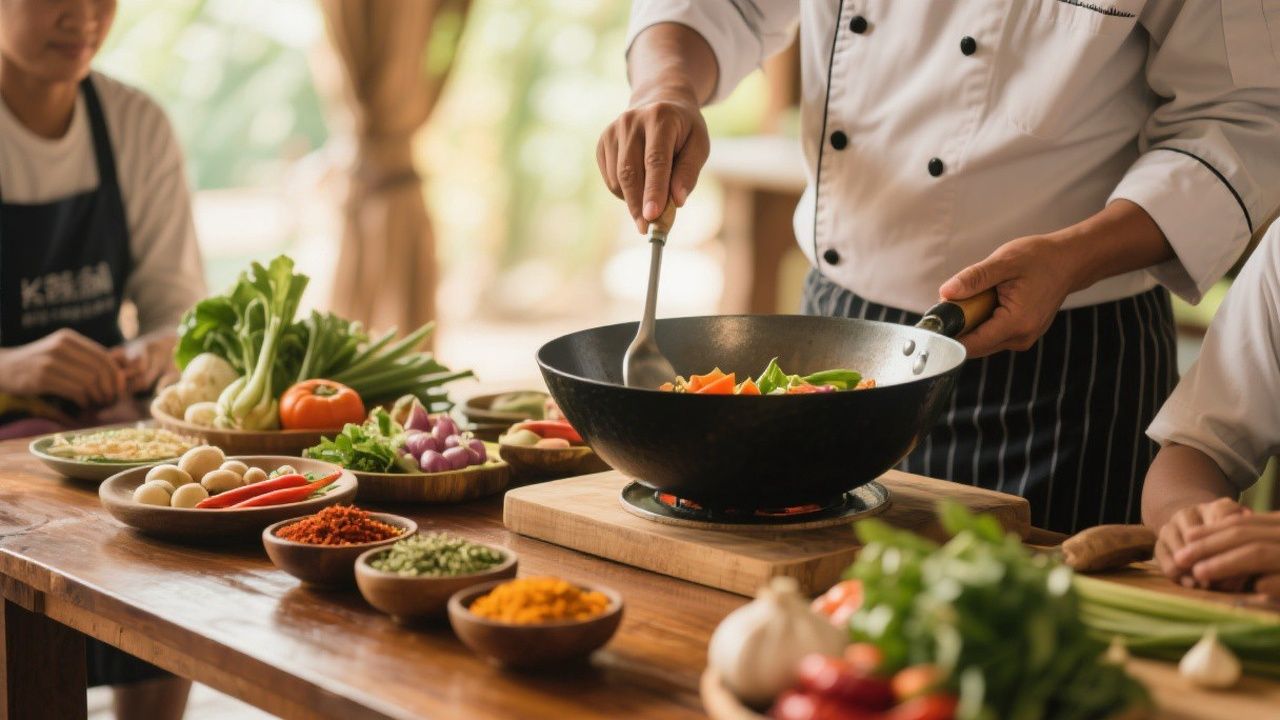
Satay is one of Thailand's most famous street foods. For 20 skewers, combine 2 tablespoons of curry powder (Mae Ploy brand), 2 tablespoons of coconut milk, 1 tablespoon of fish sauce, 1 tablespoon of sugar, 2 minced garlic cloves, 1 teaspoon of turmeric, and 1 teaspoon of coriander powder. Cut 500 grams of chicken thigh into thin strips, toss with the marinade, and refrigerate for at least 2 hours. Chicken thigh is essential; breast meat dries out on the grill.
Thread the marinated chicken onto soaked bamboo skewers, about 4 pieces per skewer. Grill over medium-high heat for 3 to 4 minutes per side. While the chicken grills, make the peanut sauce by combining 3 tablespoons of peanut butter, 2 tablespoons of coconut milk, 1 tablespoon of fish sauce, 1 tablespoon of tamarind paste, 1 tablespoon of sugar, and a pinch of cayenne pepper in a small saucepan. Heat over low heat, stirring constantly, until smooth and thickened, about 5 minutes. Serve with cucumber relish. The total cost for 20 satay skewers with sauce is about $8.
Essential Tips to Keep in Mind
- Invest in a carbon steel wok, not a non-stick one. Carbon steel woks develop a natural non-stick patina over time and can handle the high heat required for Thai cooking. A 14-inch wok costs about $35 and will last decades.
- Use Thai fish sauce, not Vietnamese or Filipino varieties. The flavor profiles are different, and Thai fish sauce is what Thai recipes are designed around.
- Balance is everything in Thai cooking. Every dish should hit sweet, sour, salty, spicy, and sometimes bitter notes. Taste constantly and adjust one element at a time.
- Fresh is always better than dried for herbs. Dried lemongrass and dried kaffir lime leaves are poor substitutes. If you can't find fresh, use frozen before resorting to dried.
- Don't be afraid of fish sauce. The pungent smell dissipates almost entirely during cooking, leaving behind a deep savory flavor you can't achieve with salt alone.
Frequently Asked Questions
Can I make these recipes vegetarian or vegan?
Most Thai dishes can be adapted. Replace fish sauce with soy sauce or a mixture of seaweed and soy sauce for umami. Replace shrimp paste with miso paste. The results won't be identical but will still be delicious.
Where can I buy Thai ingredients outside of Thailand?
Asian grocery chains like H Mart and 99 Ranch Market carry most ingredients. For hard-to-find items, online stores like ImportFood.com and TempleofThai.com ship nationwide in the US.
How spicy should authentic Thai food be?
Authentic Thai street food is significantly spicier than what most Western restaurants serve. Start with half the recommended chilies and adjust upward. Thai chilies are about 10 to 20 times hotter than jalapenos, so a little goes a very long way.
Final Thoughts
Cooking Thai food at home is one of the most rewarding culinary projects you can undertake. The flavors are bold, the techniques are learnable, and the ingredients are increasingly accessible. You don't need a professional kitchen or years of training. You need a hot wok, a well-stocked pantry, and the willingness to taste, adjust, and try again. Start with the recipes above, cook them for people you love, and watch their faces when they taste what you've created. That moment is worth every minute of preparation.