The Ultimate Guide to Exploring the Galapagos Islands
I booked my Galapagos trip exactly 11 months in advance, partly because I had read that last-minute deals were a myth and partly because I am an obsessive planner. Both turned out to be wrong. I ended up on an eight-day cruise through the central and western islands for $2,800 -- roughly half what most people pay -- by walking into a last-minute agency in Puerto Ayora the day before departure. But I am getting ahead of myself. This Galapagos Islands guide covers everything from choosing between cruise and land-based travel to the wildlife encounters that will rearrange your understanding of the natural world.
The Galapagos archipelago sits 1,000 kilometers west of mainland Ecuador, straddling the equator. Thirteen major islands, six smaller islands, and over 40 islets make up the park, which is 97 percent protected as a national park. Charles Darwin visited in 1835, and the observations he made here became foundational to his theory of evolution by natural selection. What struck me most was not the individual species -- though the giant tortoises and blue-footed boobies are extraordinary -- but the complete absence of fear. Animals here have evolved without land predators, so they simply do not care that you are standing two feet away. A sea lion pup napped on my backpack while I ate lunch on a beach. A mockingbird landed on my shoe and stared at me expectantly, apparently hoping for water.
cruise vs land-based tours
Cruises are the traditional way to explore the Galapagos and for good reason. A cruise covers far more ground than a land-based trip, visiting multiple islands each day while you sleep on board. Most cruises follow fixed itineraries approved by the Galapagos National Park, and each itinerary visits a specific set of visitor sites. I chose an eight-day western itinerary on the M/Y Beluga, a 16-passenger catamaran, and visited Isabela, Fernandina, Santiago, and Santa Cruz islands. The cost was $2,800 per person including all meals, guides, and activities -- a last-minute rate that would normally cost $4,500 to $5,000 booked in advance.
Land-based tours, based out of Puerto Ayora on Santa Cruz Island or Puerto Villamil on Isabela, offer more flexibility and lower costs. You stay in hotels (decent options start at $40 per night), take day boats to nearby islands, and arrange activities independently. A day trip to North Seymour Island costs about $120 including guide and lunch; a day trip to Bartolome Island runs $150 to $180. Over a week, land-based costs typically total $1,200 to $1,800 including accommodation, compared to $3,000 to $5,000 for a cruise. The tradeoff is range: land-based trips cannot reach the western islands (Fernandina and western Isabela), which I consider the most spectacular part of the archipelago.
My recommendation depends on your budget and priorities. If this is a once-in-a-lifetime trip and you can afford it, do a cruise. The ability to wake up at a different island every morning, with wildlife encounters before breakfast, is incomparable. If you are on a tighter budget or prefer the freedom to explore at your own pace, a land-based trip still delivers incredible experiences, especially around Santa Cruz and Isabela. I met travelers in Puerto Ayora who had been land-based for two weeks and were still discovering new things daily.
wildlife viewing guide
The Galapagos wildlife viewing is unlike anything else I have experienced in 15 years of travel. On my first morning, before I had even finished breakfast, I watched marine iguanas swimming underwater from the deck of our boat. By the end of day one, I had snorkeled with sea lions, spotted a Galapagos penguin (the only penguin species north of the equator), and watched blue-footed boobies perform their famous mating dance -- the male lifting one bright blue foot at a time in a slow, deliberate display.
Snorkeling is the single best wildlife activity in the Galapagos. At Devil's Crown near Floreana Island, I drifted through a partially submerged volcanic crater and swam alongside Galapagos sharks (harmless to humans), sea turtles, and schools of tropical fish so dense I could barely see through them. At Kicker Rock near San Cristobal, snorkelers regularly spot hammerhead sharks. I did not see hammerheads, but a sea lion played with me for 15 minutes, spinning and diving and blowing bubbles in my face. Snorkeling gear was provided by our boat, but I brought my own mask and snorkel for a better fit.
On land, the giant tortoises are the marquee attraction. The highlands of Santa Cruz Island contain wild tortoises roaming through grassy fields, and you can walk among them freely. I visited Rancho Primicias (entry $5), a private reserve where tortoises gather in a muddy pond, and stood three feet from a tortoise estimated to be over 150 years old. The animals are enormous -- some weigh over 250 kilograms (550 pounds) -- and move with a slow, deliberate grace that makes you feel like you have stepped into a different geological era. The Charles Darwin Research Station in Puerto Ayora also houses tortoises as part of a breeding program; entry is free with a donation suggested.
best time for different species
The Galapagos has two distinct seasons, and the best time to visit depends on what you want to see. From January to May, the warmer season brings calm seas, water temperatures around 25 degrees Celsius (77 Fahrenheit), and excellent snorkeling. This is also when green sea turtles nest on beaches, marine iguanas on Isabela Island turn bright red and green during mating season, and waved albatrosses arrive on Espanola Island for their elaborate courtship dances. I visited in late January and snorkeled without a wetsuit comfortably.
From June to December, the cooler Humboldt Current brings nutrient-rich waters, colder sea temperatures (18 to 22 Celsius, 64-72 Fahrenheit), and richer marine life. This is peak season for whale and dolphin sightings -- I spoke with travelers on a June cruise who saw orcas and humpback whales from the boat deck. Galapagos penguins are more active during these months, and sea lion pups are born between August and October. The cooler water means you will want a wetsuit for snorkeling, which most boats provide.
For birdwatchers, specific months matter. Flamingos are most visible at Floreana Island's lagoon from April to December. Magnificent frigatebirds inflate their red throat pouches for mating from March to June. Short-eared owls on Genovesa Island hunt during the day (a rare behavior) and are easiest to spot from January to March. I am not a serious birder, but even I was moved by the sheer density and tameness of the birdlife. A blue-footed booby stood on the trail in front of me and simply refused to move. I had to walk around it.
Galapagos National Park rules
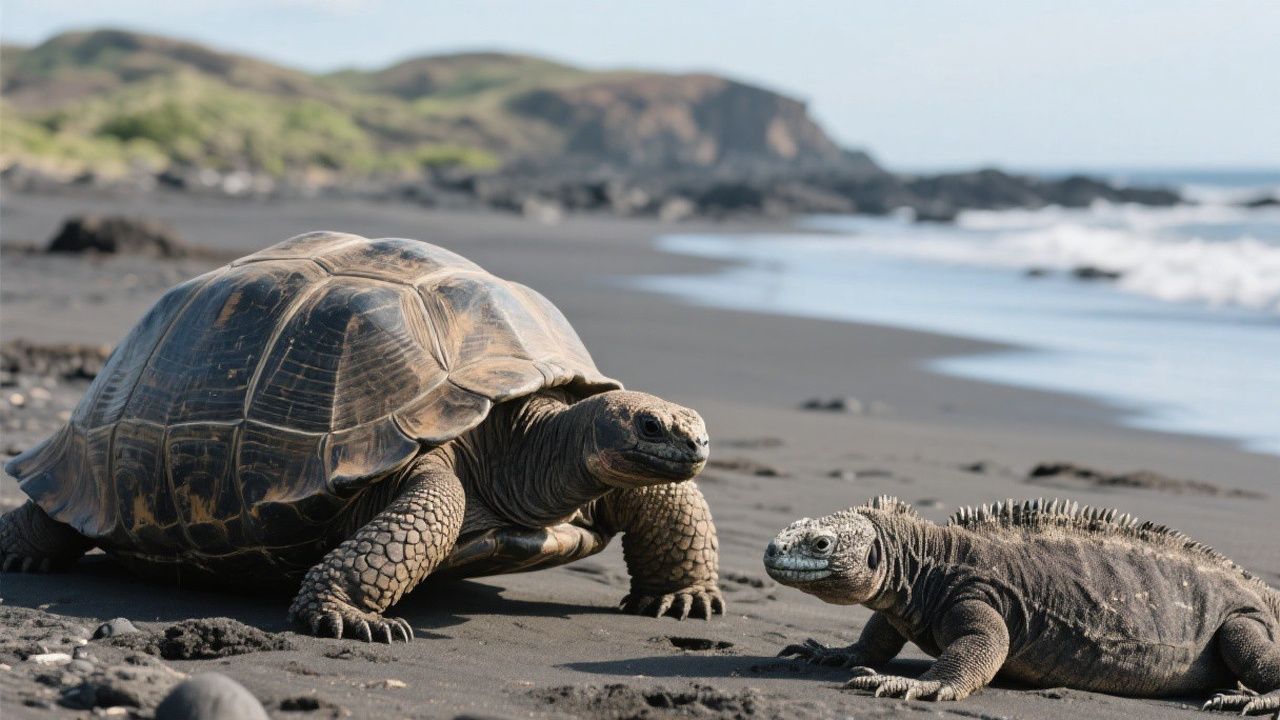
The Galapagos National Park has strict rules designed to protect the fragile ecosystem, and every visitor must be accompanied by a licensed naturalist guide at all times while on land. You must stay on marked trails, maintain a two-meter distance from wildlife (though animals may approach you, which is fine), and carry all trash with you. No food is allowed on landing sites, and smoking is prohibited. These rules are not suggestions -- I watched a guide firmly redirect a tourist who reached out to touch a marine iguana.
The park entrance fee is $200 for most foreign visitors (reduced to $100 for citizens of most South American countries), payable in cash at the airport on arrival. This fee funds conservation efforts, park maintenance, and scientific research. Additionally, you must purchase a Transit Control Card ($20) before flying to the Galapagos, available at the Quito or Guayaquil airport. Both fees are non-negotiable. I also paid a $10 municipal tax in Puerto Ayora upon arrival, so budget at least $230 in cash fees before you even start spending on tours or accommodation.
Independent travel within the park is extremely limited. You cannot simply rent a car and drive around the islands. All visitor sites require a licensed guide, and inter-island transport is restricted to authorized boats and small aircraft. This sounds restrictive, but it is precisely why the Galapagos remains so pristine. The regulations work. I saw zero litter on any beach or trail, and the wildlife clearly benefits from the protection.
Essential Tips to Keep in Mind
- Bring reef-safe sunscreen. Regular sunscreen damages coral reefs and marine ecosystems. The park strongly encourages mineral-based sunscreens, and some boats require them.
- Pack motion sickness medication. The ocean between islands can be rough, especially in the cooler months. I took Dramamine before every overnight navigation and was grateful I did.
- Carry cash in small denominations. Credit cards are accepted at larger hotels and restaurants in Puerto Ayora, but many smaller vendors, boat operators, and the park entrance fee require cash. ATMs on the islands have low withdrawal limits and sometimes run empty.
- Bring a good camera with a zoom lens. Phone cameras are fine for close-up wildlife (which is most encounters), but a 200mm or 300mm lens captures birds in flight and distant marine life far better.
- Book flights to the Galapagos through an Ecuadorean travel agency rather than directly. LATAM and Avianca sometimes charge foreign tourists double the local fare. My flight from Quito to Baltra cost $220 booked through an agency versus $420 on the airline's website.
Frequently Asked Questions
How much does a Galapagos trip cost?
Budget land-based trips start around $1,200 per person for one week including accommodation, day trips, and meals. Mid-range cruises cost $3,000 to $5,000 for seven to eight nights. Luxury cruises can exceed $8,000. My total cost for 10 days (including flights from Quito, an eight-day cruise, and two nights in Puerto Ayora) was $3,800.
Do I need to be a strong swimmer for the Galapagos?
Basic swimming ability is sufficient for most snorkeling activities. Life jackets and wetsuits are provided, and guides stay close to less confident swimmers. Dry snorkeling (with a full face mask) is also an option. If you cannot swim, you can still enjoy incredible wildlife viewing on land walks.
Is the Galapagos worth the cost?
Without question. The combination of unique wildlife, pristine landscapes, and world-class snorkeling makes the Galapagos unlike any other destination on Earth. Yes, it is expensive, but the experience justifies the price for most travelers. I would rank it among the top three travel experiences of my life.
Final Thoughts
The Galapagos Islands changed the way I think about the natural world. Watching a giant tortoise eat a cactus pad 10 feet away, snorkeling with a playful sea lion pup, and standing on volcanic rock so recent that nothing has grown on it yet -- these are experiences that no photograph or documentary can fully convey. My Ecuador travel advice is simple: do not overthink it, do not wait for the "perfect" time, and do not assume it is out of your budget. The last-minute agencies in Puerto Ayora make it more accessible than most people realize. Go. The sea lions are waiting.