Glamping in New Zealand: The Best Luxury Camping Experiences
New Zealand's landscapes are so dramatic they look computer-generated, and sleeping inside them -- rather than driving past on the way to the next lookout -- is the single best decision you can make for your trip. I discovered glamping in New Zealand on my third visit, after two trips of motels and holiday parks, and it completely changed how I experience the country. There is a fundamental difference between watching sunrise from a hotel window and watching it from a canvas tent with the sides rolled up, birdsong filling the valley, and steam rising from your morning coffee brewed on a campfire. Here are the best luxury camping NZ experiences, organized by style.
What to pack for glamping
One of the great things about glamping in New Zealand is how little you need to bring. Unlike traditional camping, where your pack weight determines your comfort, glamping provides the essentials: a proper bed with linens, cooking equipment, lighting, and bathroom facilities. What you do need to pack are the personal items that make the experience comfortable and the outdoor gear that lets you take advantage of the extraordinary surroundings.
Layered clothing is non-negotiable. New Zealand weather changes fast, and you can experience four seasons in a single day, especially on the South Island. I always pack a merino wool base layer (Icebreaker is a New Zealand brand and widely available locally), a fleece mid-layer, and a waterproof shell. Even in summer (December-February), temperatures in mountain areas like the Mackenzie Country and Fiordland can drop to near freezing at night. Good walking shoes or hiking boots are essential -- most glamping sites are set on working farms or conservation land with uneven terrain.
Beyond clothing, bring a headlamp, insect repellent (sandflies are the one genuine annoyance of New Zealand's outdoors, particularly on the West Coast), sunscreen, and a reusable water bottle. A portable power bank is useful since some remote glamping sites have limited or no electricity. I also bring a good book and a journal -- the silence and scenery at these sites create the perfect conditions for both, and cell reception is often nonexistent.
If you are glamping at a site with cooking facilities, consider bringing specialty ingredients from a farmers market in your departure city. Fresh New Zealand cheese, local bread, and a bottle of Central Otago pinot noir make for an extraordinary evening meal when paired with a sunset view from your tent deck.
Safari tent experiences
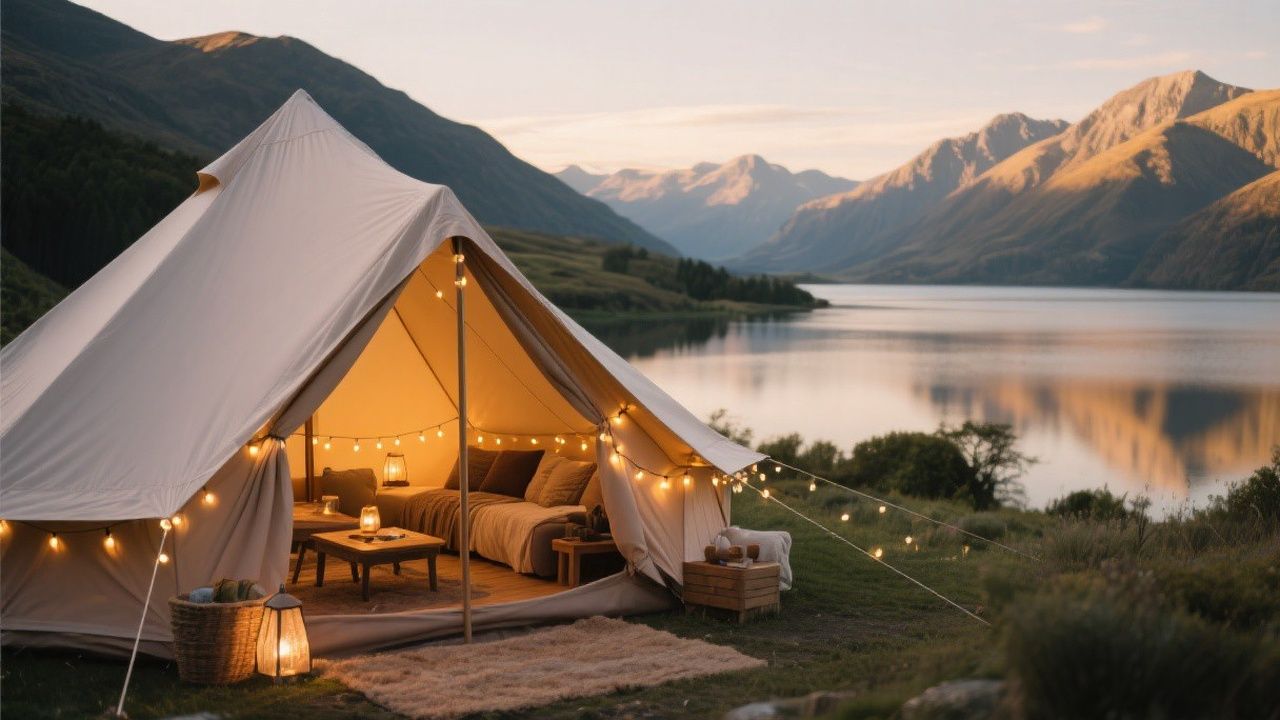
Safari tents are the backbone of New Zealand's glamping scene, and the best ones combine the romance of canvas with genuine comfort. Canopy Camping Escapes operates a curated collection of safari tent sites across both islands, and their quality is consistently excellent. The Canopy site at Purepod in the Kaikoura region is one of the most extraordinary places I have ever slept. The tent sits on a hilltop overlooking the Pacific Ocean, with floor-to-ceiling glass panels that frame the coastline and the Kaikoura mountains. At $350-450 per night, it includes a king bed, a kitchenette, an outdoor bath, and a telescope for stargazing. I lay in bed watching the Milky Way with zero light pollution and heard seals barking on the rocks below.
On the North Island, the Nightfall Safari Tent near Whangarei offers a more intimate experience at $220-300 per night. Set in native bush with a private stream, the tent has a queen bed, a wood-burning stove for chilly evenings, and an outdoor shower surrounded by ferns. The property is off-grid with solar power and rainwater collection, but the comfort level is high -- hot showers, proper lighting, and a well-equipped kitchen. The owners provide a breakfast hamper with local eggs, bread, and homemade jam, and they can arrange guided bush walks and kayaking on the nearby river.
For something truly remote, the Waitaki Waters safari tents on the South Island sit on a high-country station near Lake Benmore. At $200-280 per night, these tents offer panoramic views of the Mackenzie Basin and the Southern Alps. The property is a working farm, and the hosts will take you on a 4WD tour of the station to see merino sheep, red deer, and some of the most dramatic scenery in the country. The tents are spacious with proper beds, a small kitchen, and a fire pit for evening gatherings.
Farm stay glamping
Farm stay glamping in New Zealand gives you access to private landscapes that would otherwise be completely off-limits to visitors. The best farm stay glamping sites are on working properties where the hosts are passionate about sharing their land and lifestyle. Annabel's Cottage at the Cape Campbell Farm in Marlborough is a standout. At $280-380 per night, this beautifully restored cottage sits on a 2,000-acre sheep station with private access to a wild beach and views across Cook Strait to the North Island. The cottage has a wood-fired hot tub, a fully equipped kitchen, and a garden with fresh herbs and vegetables for cooking. The hosts provide a farm tour where you can help with sheep mustering and learn about high-country farming.
In the Hawke's Bay wine region, Black Barn Retreats offers glamping tents among the vines at $200-300 per night. Each tent has a king bed, an en-suite bathroom with hot shower, and a deck overlooking the vineyard. The property is a working winery, and guests get complimentary wine tastings and can join the harvest if they visit during vintage season (March-April). The location is ideal for exploring Hawke's Bay's food and wine scene -- the region has over 70 wineries within a 30-minute drive.
On the South Island, the Shearer's Quarters at Mesopotamia Station in the Canterbury high country is a glamping experience steeped in history. This 50,000-acre station has been operating since 1858, and the restored shearer's quarters offer basic but atmospheric accommodation at $150-200 per night. There is no electricity -- lighting is by candle and gas lamp -- but there is a hot shower, a kitchen with a gas stove, and the most spectacular stargazing you will find anywhere. The station sits at the base of the Southern Alps, and the views of snow-capped peaks from the front porch are genuinely breathtaking.
Pod and dome accommodations
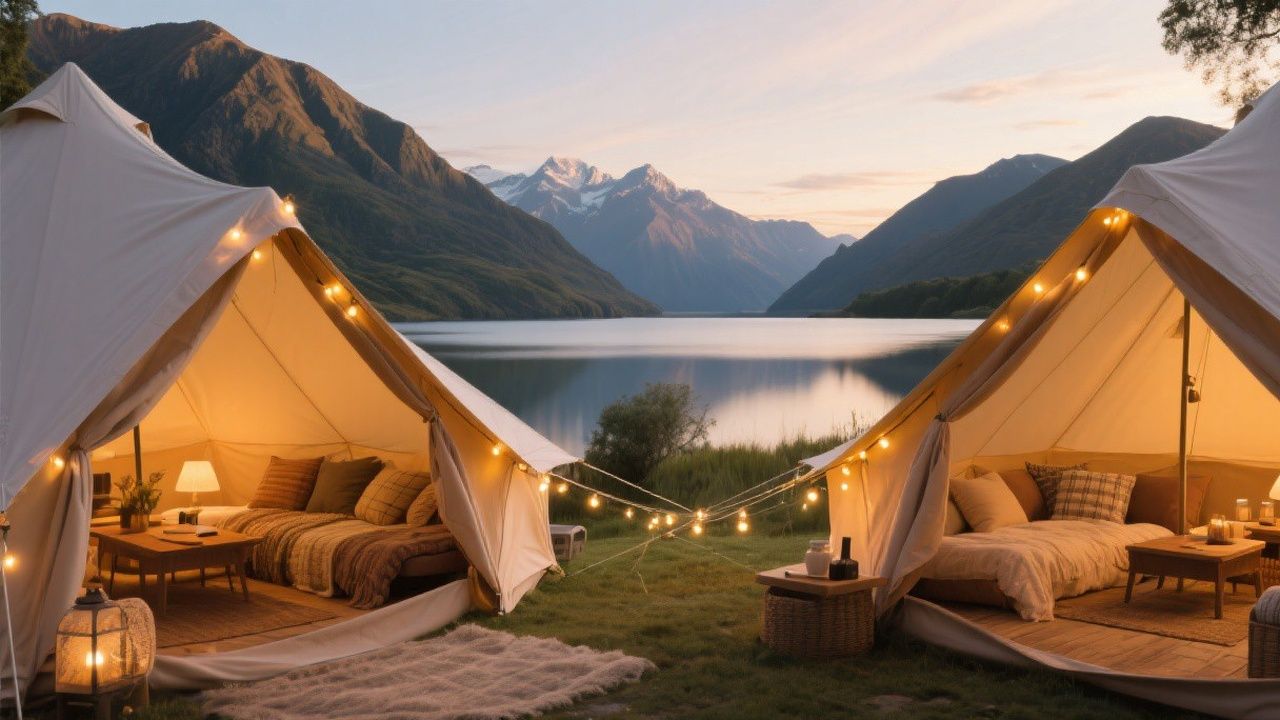
Geodesic domes and eco-pods are a newer addition to New Zealand's glamping scene, and they offer a futuristic twist on the outdoor experience. The Dome at Lake Wanaka is one of the most photographed glamping sites in the country, and for good reason. At $300-400 per night, this geodesic dome sits on a private peninsula jutting into Lake Wanaka with unobstructed views of the lake and Mount Aspiring. The interior is surprisingly luxurious with a king bed, a bathroom with underfloor heating, a kitchenette, and a telescope. The dome's transparent panels allow 360-degree views, and at night the lack of light pollution reveals a staggering number of stars.
On the Coromandel Peninsula, Hot Water Beach Top 10 Holiday Park offers eco-pods at $120-180 per night that are a significant step up from standard camping. These insulated pods have proper beds, power outlets, and heating, and the location puts you within walking distance of Hot Water Beach (where you can dig your own natural hot pool in the sand at low tide) and Cathedral Cove, one of New Zealand's most iconic coastal formations. It is a budget-friendly entry point into glamping New Zealand that works well for families.
The Hapuku Lodge tree houses near Kaikoura deserve a mention here even though they are technically treehouses rather than pods. At $400-600 per night, these elevated structures sit in a kanuka tree canopy with views of the mountains and the ocean. Each unit has a separate bedroom, a lounge area, a kitchenette, and a balcony with outdoor seating. The lodge also has a main restaurant serving excellent local seafood and a day spa. It is one of the more expensive glamping options in New Zealand, but the combination of luxury and location is hard to beat.
Essential Tips to Keep in Mind
- Book glamping sites at least 2-3 months in advance, especially during the New Zealand summer (December-February). The best properties have limited availability and fill up quickly, particularly around Christmas and New Year.
- Check the access road conditions before arrival. Many glamping sites are on gravel or unsealed roads that can be challenging after rain. A 2WD vehicle is usually fine, but check with the property about current road conditions, especially on the West Coast and in high-country areas.
- Bring groceries with you. Most glamping sites are far from shops and restaurants, and you will want to cook at least some meals. Stop at a supermarket in the nearest town before driving to the site.
- Respect the isolation. Many glamping sites have no cell reception and limited emergency access. Tell someone your travel plans and expected return date. Carry a personal locator beacon if you plan to hike in the surrounding area.
- Factor in the driving time. New Zealand looks compact on a map, but roads are winding and speeds are low. A glamping site that is 200 kilometers from your current location might take 3-4 hours to reach. Plan your itinerary with realistic driving times.
Frequently Asked Questions
How much does glamping in New Zealand cost?
Prices range from $120-200 per night for basic eco-pods to $400-600 per night for luxury domes and treehouses. Budget around $250-350 per night for a quality safari tent or farm stay experience with good amenities and a memorable location.
Is glamping available year-round in New Zealand?
Most glamping sites operate year-round, but some close during the winter months (June-August) due to cold weather and reduced daylight. Sites with wood-burning stoves, heating, and insulation are comfortable in winter, but check with the property about seasonal availability before booking.
Is glamping in New Zealand suitable for families?
Many glamping sites welcome children, and farm stays are particularly popular with families. Check age policies and safety features (fences, fire guards, access to water) before booking. The Hot Water Beach eco-pods and Canopy Camping Escapes sites are good family-friendly options.
Final Thoughts
Glamping in New Zealand is not just about comfortable beds in scenic locations -- it is about experiencing the country's extraordinary landscapes in a way that creates genuine connection. Waking up on a working farm, falling asleep in a dome under the stars, or watching the sunrise from a safari tent on a clifftop are the moments that define a New Zealand trip. Budget for at least two or three glamping nights on your itinerary, and I suspect they will end up being the highlights you remember most.