The Best Handmade Ceramics to Buy in Oaxaca, Mexico
I first visited Oaxaca City during Dia de los Muertos, where Oaxaca ceramics fill every market, and the markets overflowed with ceramics of every description. Black pottery shaped like skulls sat alongside green-glazed bowls, painted clay revolutionary soldiers, and enormous barro rojo cazuelas for making mole negro. I bought a small jaguar figure carved from copal wood with impossibly intricate patterns and a set of six barro negro mezcal cups, spending less than 500 pesos for both. Six years later, the jaguar sits on my bookshelf and the cups come out with every guest. They are not decorative objects. They are part of my daily life, which is exactly what Oaxacan ceramics are designed to be.
Oaxaca state has the richest ceramic traditions in Mexico, and Oaxaca ceramics are celebrated worldwide, with distinct styles from different villages, each using local clay, traditional firing, and designs passed down through generations. The three most important traditions are barro negro from San Bartolo Coyotepec, green-glazed pottery from Santa Maria Atzompa, and alebrijes from San Martin Tilcajete and San Antonio Arrazola. Understanding these differences transforms shopping from a tourist transaction into a genuine cultural exchange.
Barro Negro Pottery Tradition
Barro negro, or black clay pottery, dates to the pre-Columbian Monte Alban civilization, but the distinctive glossy black finish was developed in the 1950s by Dona Rosa Real de Nieto. She discovered that polishing the clay with a quartz stone before firing and reducing kiln oxygen produced a deep, metallic-black sheen unlike anything else in Mexican ceramics. The technique revolutionized the craft.
San Bartolo Coyotepec, 12 kilometers south of Oaxaca City, is the production center. The main road is lined with family workshops welcoming visitors. Clay is dug locally, shaped by hand or kick wheel, sun-dried, polished with quartz, and wood-fired. Small cups cost 40 to 80 pesos. Medium vases and bowls (20 to 30 centimeters) cost 200 to 600 pesos. Large sculptural pieces reach 2,000 to 10,000 pesos. Dona Rosa's descendants maintain the original workshop, open daily 9 AM to 6 PM with demonstrations. Prices run 20 to 30 percent above neighboring workshops, but quality is consistent. For better prices, visit smaller workshops a few blocks off the main road. I bought four mezcal cups from Taller Artesanal for 200 pesos total, indistinguishable in quality from pieces costing twice as much at the Dona Rosa workshop.
Green Glazed Pottery of Santa Maria Atzompa
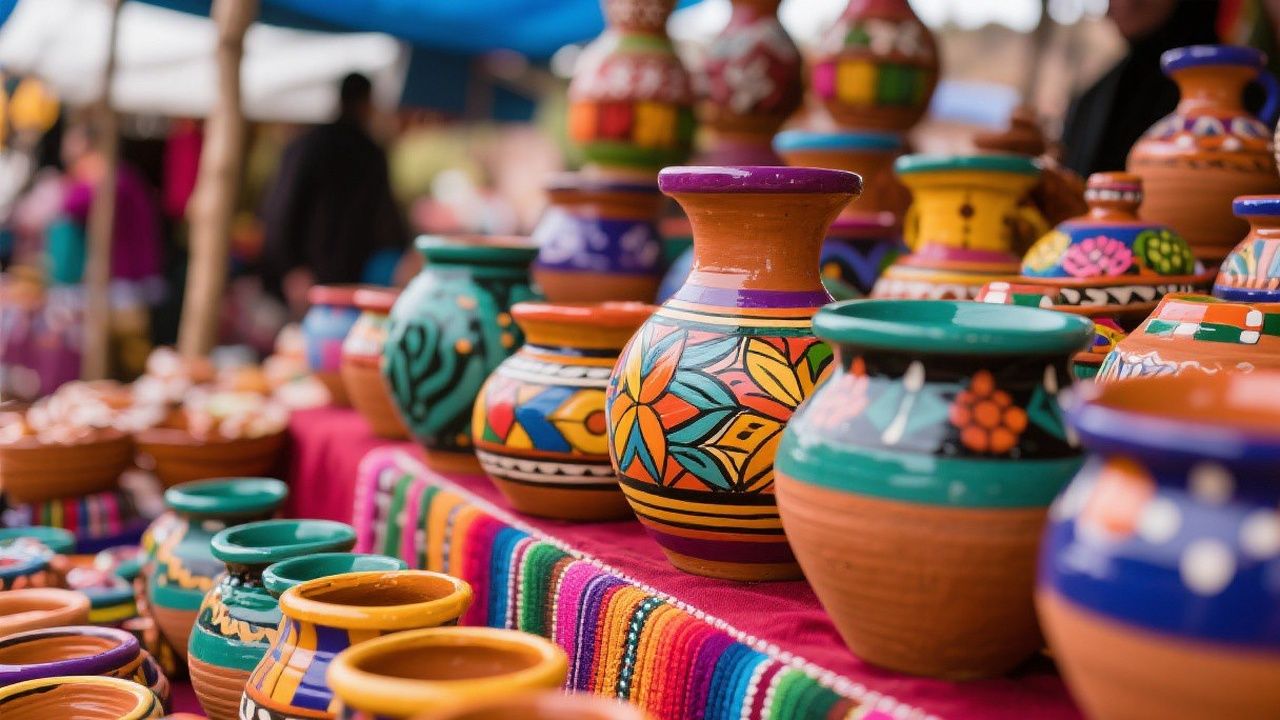
Santa Maria Atzompa, 8 kilometers west of Oaxaca City, produces distinctive green-glazed pottery made for over 500 years. Local red clay is shaped, coated with a lead-free green glaze of copper and magnesium oxides, and fired at low temperatures in wood kilns. The result is warm, earthy ceramic with glossy green surfaces ranging from pale celadon to deep forest green. Common forms include bowls, plates, cups, and planters.
Reach the village by colectivo from the corner of Calle Juarez and Calle Morelos in Oaxaca City, departing every 15 minutes for 10 pesos. The ride takes 20 minutes. Most workshops are family operations with open-air studios. A medium green-glazed bowl costs 60 to 150 pesos. A set of four dinner plates costs 300 to 600 pesos. Large planters range from 200 to 800 pesos. Contemporary artist Angelica Vasquez Cruz creates elaborate sculptural pieces blending traditional Atzompa techniques with modern sensibilities, priced from 1,500 to 15,000 pesos.
Alebrije Carving Traditions
Alebrijes are fantastical creatures carved from copal wood, covered in intricate patterns of bright colors. Though originating in 1930s Mexico City, they found their true home in Oaxaca. The three main producing villages are San Martin Tilcajete, San Antonio Arrazola, and La Union Tejalapan.
Artisans carve figures from sustainably harvested copal, sand them smooth, apply base paint, then paint intricate patterns using tiny brushes. Some pieces require dozens of hours. Small alebrijes (10 to 15 centimeters) cost 150 to 400 pesos. Medium pieces (20 to 40 centimeters) cost 500 to 2,000 pesos. Large museum-quality pieces by recognized masters like Jacobo Angeles or Zeny Fuentes range from 5,000 to 30,000 pesos. San Martin Tilcajete is accessible by colectivo from Mercado de Abastos for 20 pesos. The main street is lined with workshops. I bought a small armadillo alebrije painted in purple and orange flowers for 350 pesos.
Shipping Crafts Home

Correos de Mexico offers international surface mail for 200 to 400 pesos per kilogram (four to eight weeks) and airmail for 400 to 800 pesos per kilogram (two to three weeks). Many workshops offer packing and shipping for an additional 100 to 300 pesos per item, including custom foam and double-boxing. DHL and FedEx operate in Oaxaca City, charging USD 15 to USD 30 per kilogram to the US with five to seven day delivery. A box of three medium ceramic bowls (4 kilograms) to California via DHL cost me USD 85, professionally packed with guaranteed safe delivery.
If carrying purchases home, wrap each piece in bubble wrap and position in your checked luggage center surrounded by clothing. I have transported barro negro cups and alebrijes on four trips without breakage. For large or fragile pieces, shipping is safer. Most workshops will hold purchases and ship later if you prefer not to carry them during travel.
Essential Tips to Keep in Mind
- Visit artisan villages directly for the best prices and the chance to meet makers. Colectivos cost 10 to 20 pesos from Oaxaca City.
- Compare prices across multiple workshops in the same village. Quality and pricing vary significantly between families.
- Ask about lead-free glazes. Most contemporary workshops use safe alternatives, but always verify for food-use items.
- Have workshops pack and ship fragile items professionally. The 100 to 300 peso fee is worthwhile.
- Negotiate respectfully but recognize handcrafted items have real labor value.
- Buy barro negro cups for mezcal. They are inexpensive, beautiful, and the traditional serving vessel.
- Visit during Dia de los Muertos (late October to early November) for the largest selection and most festive atmosphere.
Frequently Asked Questions
How much should I expect to pay for Oaxacan ceramics?
Small items like cups and figurines cost 40 to 200 pesos. Medium bowls and plates cost 200 to 600 pesos. Large decorative pieces range from 1,000 to 10,000 pesos. Alebrijes follow similar pricing based on size and artist reputation.
Is Oaxacan pottery food-safe?
Most contemporary workshops use lead-free glazes, but always ask before buying pottery for food use. Barro negro is safe for dry foods and mezcal but not ideal for acidic foods like salsa, which can react with the clay surface.
Can I visit artisan workshops without a tour guide?
Yes. All major artisan villages are accessible by colectivo, and most workshops welcome walk-in visitors. A guide helps with context but is not necessary for shopping.
Final Thoughts
Oaxaca ceramics, from barro negro to alebrijes, are among Mexico's most vibrant and accessible artisan traditions. The pottery you buy is not a sterile factory product. It is made by hand by families who have worked with the same clay and techniques for generations. Every bowl, cup, and alebrije carries the mark of its maker. Visit the villages, meet the artisans, and bring home something that will last a lifetime.