How to Navigate the Bangkok Subway and BTS Systems Like a Local
My first week in Bangkok, I spent roughly 400 THB per day on taxis that spent more time stuck in traffic than actually moving. A colleague at the coworking space where I was working watched me arrive 45 minutes late one morning, dripping sweat, and said simply: "You are not using the BTS." She walked me to the Chit Lom station, showed me how to buy a Rabbit Card, and my relationship with Bangkok changed overnight. The city's public transport network, anchored by the BTS Skytrain and MRT subway, is fast, air-conditioned, cheap, and genuinely pleasant to use once you understand how it works. Here is my complete Bangkok BTS guide and MRT tips based on two years of daily commuting in the city.
Connecting Between Systems
Bangkok has three main rail systems: the BTS Skytrain (two lines: Sukhumvit and Silom), the MRT subway (Blue and Purple lines), and the Airport Rail Link. These systems are not fully integrated, which means transferring between them sometimes requires a short walk and a separate ticket. The key interchange stations are: Siam (BTS transfer between Sukhumvit and Silom lines), Asok/Sukhumvit (BTS Sukhumvit to MRT Blue Line, connected by an underground walkway), Sala Daeng (BTS Silom to MRT Blue Line, 5-minute walk), and Phaya Thai (BTS Sukhumvit to Airport Rail Link). I use Asok/Sukhumvit interchange almost daily, and the underground walkway is clearly signed, air-conditioned, and takes about 5 minutes at a normal pace.
The lack of a single ticketing system is the biggest frustration. The BTS uses the Rabbit Card (a stored-value card), the MRT uses its own MRT Plus Card, and the Airport Rail Link uses yet another card. You cannot use a Rabbit Card on the MRT or vice versa. I carry both a Rabbit Card and an MRT Plus Card in my wallet at all times. Each card costs 50 THB as a refundable deposit, and you can top up at machines in every station. The top-up machines accept coins and bills (20, 50, 100 THB notes) and have English-language interfaces. I keep about 200 THB stored on each card, which covers roughly a week of commuting for me.
There is a new integrated ticketing system being rolled out called the Mangmoom Card, which is supposed to work across all Bangkok transit systems including buses and boats. As of early 2025, it works on the MRT and some bus routes but BTS integration is still limited. I bought one but still carry my Rabbit Card as backup because not all BTS gates accept it yet. In a year or two, this should be seamless, but for now, carry multiple cards or use single-journey tokens.
Peak Hour Strategies
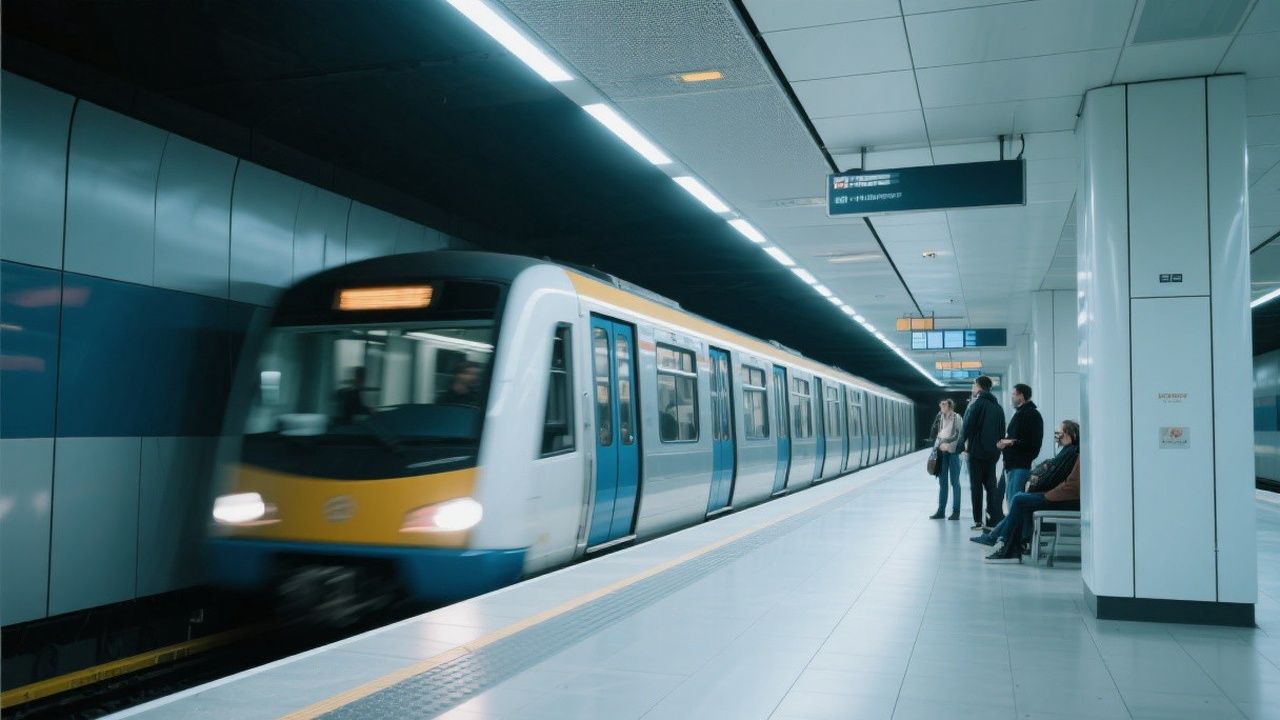
Bangkok's rush hours are 7:00-9:30 a.m. and 5:00-7:30 p.m., Monday through Friday. During these windows, the BTS and MRT are packed to capacity, and the experience ranges from uncomfortable to genuinely claustrophobic. I have been on a Sukhumvit Line train at 8:15 a.m. where I could not lift my arms from my sides. If you must travel during peak hours, here are the strategies that make it bearable.
Board at the terminal stations (Mo Chit on the Sukhumvit Line, Kheha on the Silom Line, Tao Poon or Bang Khae on the MRT Blue Line) where you are almost guaranteed a seat. If you are not near a terminal, board at a station just before a major interchange. Passengers typically empty out at interchange stations, so boarding one stop before means you can grab a seat from departing passengers. For example, boarding at Ploen Chit instead of Chit Lom (one stop earlier) during evening rush hour almost always gets me a seat because a wave of passengers exits at Siam, two stops later.
Avoid the popular tourist stops during peak hours entirely. Siam, Asok, Nana, and Sala Daeng are the four busiest stations, and the platforms become dangerously crowded. If I need to go through Siam during rush hour, I walk between National Stadium and Ratchadamri stations (about 15 minutes through the Siam Paragon/MBK shopping complex) to bypass the station entirely. The walk is air-conditioned, faster than waiting for two packed trains, and far less stressful.
Weekend peak is different. Instead of commuter crowds, you get tourist crowds concentrated around Siam (for shopping), Nana (for nightlife), and Saphan Taksin (for river boats to Wat Arun). Saturday afternoons are the busiest time on the Silom Line. I avoid the BTS entirely on Saturday afternoons and use the river boat instead, which is more scenic and rarely crowded.
Tuk-Tuk Usage Tips
Tuk-tuks are iconic but also the most common way tourists get overcharged in Bangkok. I use tuk-tuks occasionally, but only with a clear understanding of the dynamic. The golden rule: always agree on a price before getting in. Tuk-tuks do not have meters, and the driver will quote whatever they think you will pay. A tourist who does not negotiate will routinely be quoted 200-300 THB for a trip that should cost 60-80 THB. My approach is to ask a local (hotel staff, restaurant worker, or a friendly Thai person nearby) what the fare should be, then offer 70-80% of that as my starting negotiation. Most tuk-tuk drivers will counter once and then agree if you start walking away.
Never accept a tuk-tuk driver who says the ride is free or extremely cheap (like 20 THB) and then mentions they need to make a stop first. This is the classic gem shop scam. The driver takes you to a jewelry or tailor shop where they receive a commission, and you waste an hour being pressured into buying overpriced goods. I have been offered this deal at least 20 times near the Grand Palace and Khao San Road. The correct response is a polite but firm "no thank you" and walking to the nearest BTS station.
Tuk-tuks are genuinely useful for short trips in areas poorly served by the BTS and MRT, like the narrow sois (alleys) of Chinatown or Old City. A tuk-tuk from the Grand Palace to Khao San Road should cost about 60-80 THB and takes 10 minutes, compared to 30-40 minutes on foot in the heat. For any trip longer than 15 minutes or involving major roads during daytime, the BTS or MRT is faster, cheaper, and more comfortable.
Bus System Overview

Bangkok's bus system is the most underrated form of public transport in the city. It is cheap (standard buses cost 8 THB, air-conditioned buses 15-25 THB), extensive, and goes places the BTS and MRT do not reach. The challenge is that the system is confusing for non-Thai speakers. Bus stops display route numbers in Thai and sometimes English, but the destination signs on the buses themselves are almost entirely in Thai. I use the ViaBus app (free on iOS and Android), which tracks bus locations in real-time and shows routes in English. It is not perfect, but it has made the bus system accessible to me in a way that would otherwise be impossible.
The most useful bus routes for visitors are the air-conditioned routes: the 503 (connects Sukhumvit to Khao San Road area), the 511 (runs along Sukhumvit Road parallel to the BTS), and the 159 (connects Silom to the Grand Palace area). I take the 511 regularly when the BTS is too crowded, and it costs 25 THB versus 44 THB for the same BTS journey. The ride takes longer due to traffic, but if you are not in a hurry, it is a perfectly pleasant way to see the city from street level.
Electric buses (orange and blue) have been introduced on several routes since 2023. They are quieter, cleaner, and have digital displays showing the next stop in both Thai and English. Route 129 (Victory Monument to Rama IX Road) was the first fully electric route, and I have noticed several more appearing around the Sukhumvit area. These are a significant upgrade in comfort over the older buses.
Essential Tips to Keep in Mind
- Stand on the left side of escalators in BTS and MRT stations. The right side is for walking, and locals will politely but firmly move you if you block it.
- The BTS and MRT both ban food and drinks on trains and platforms. Finish your coffee before entering the paid area.
- Download Google Maps offline for Bangkok. It shows BTS and MRT routes, real-time schedules, and walking directions between stations.
- Carry small bills (20 and 50 THB notes) for fare machines and buses. Ticket machines often do not accept 1,000 THB notes.
- The last BTS train leaves around midnight and the last MRT around midnight as well. Plan your evening around these times or be prepared for a taxi.
- Women-only cars are available on the MRT during rush hours (first car of each train, marked with pink signs). These are a lifesaver during peak crowding.
Frequently Asked Questions
How much does a BTS ride cost?
Fares range from 16 THB (about 0.45 USD) for the shortest trips to 59 THB (about 1.65 USD) for the longest. Using a Rabbit Card gives a small discount compared to single-journey tokens. A typical ride within central Bangkok costs 30-45 THB.
Is the Bangkok public transport system safe at night?
Yes, the BTS and MRT are safe until the last train (around midnight). Stations are well-lit, staffed, and have security cameras. The areas around stations are generally safe as well, but use normal urban caution in quieter neighborhoods late at night.
Can I use contactless payment on the BTS?
Limited contactless payment (Visa/Mastercard tap) is being rolled out on the MRT and some BTS gates, but it is not universally supported yet. I recommend getting a Rabbit Card for the BTS and an MRT Plus Card for the subway to avoid any issues.
Final Thoughts
Mastering Bangkok's public transport is the single most impactful thing you can do to improve your experience in the city. It transforms Bangkok from a sweltering, traffic-choked maze into a navigable, enjoyable metropolis where you can get from a coworking space in Thong Lor to a street food market in Chinatown in 35 minutes for less than 2 USD. The BTS and MRT are clean, reliable, and genuinely pleasant. The bus system adds depth and reach. Combined, they give you access to virtually every corner of Bangkok without the stress, cost, and pollution of taxis and tuk-tuks. Give yourself two days to learn the system, and you will wonder how you ever managed without it.