How to Plan a Multi-Country Europe Trip: Logistics and Budget Breakdown
I have planned three multi-country Europe trips, ranging from a frantic 12-country sprint in 30 days (a mistake I will explain) to a well-paced 5-country route over six weeks that remains the best travel experience of my life. The difference between those two trips was not budget or ambition. It was logistics. Europe is dense, well-connected, and packed with incredible destinations, which means the temptation to cram in as many countries as possible is enormous. Resist it. The most common mistake first-time Europe planners make is trying to see everything and ending up exhausted, broke, and unable to remember half of what they saw. This Europe itinerary planning guide covers the practical framework I use to build routes that are efficient, affordable, and actually enjoyable.
Transportation Pass Comparison
The Eurail Pass is the most famous rail pass in the world, but it is not always the best value. I have used it twice and skipped it once, and each decision was correct for that specific trip. The Eurail Global Pass (available to non-EU residents) costs 236 EUR for 4 travel days within one month, 374 EUR for 7 days, and 536 EUR for 10 days. A "travel day" means you can take unlimited trains on that day. The pass covers most national rail systems but requires seat reservations on high-speed trains (TGV in France, ICE in Germany, Frecciarossa in Italy), which cost 10-30 EUR per reservation. Those reservation fees add up fast. On my 2023 trip, I paid 180 EUR in seat reservations on top of a 536 EUR pass, bringing my total rail cost to 716 EUR for 10 travel days.
For comparison, booking individual high-speed train tickets in advance directly through national rail websites often costs less. A Paris-to-Barcelona TGV ticket booked two months ahead costs 39-59 EUR. The same route booked last-minute costs 120-150 EUR. A Berlin-to-Prague ticket booked early is 18-25 EUR. The key is booking early. I use the Trainline app (which aggregates tickets across European rail operators) and book as soon as schedules are released, typically 60-90 days ahead. On my five-country trip, I spent 420 EUR total on advance-purchased train tickets for 8 journeys, compared to the 716 EUR the Eurail Pass plus reservations would have cost.
The Eurail Pass makes sense if your itinerary is flexible, you plan to take mostly regional trains (which do not require reservations), or you are covering a very large geographic area. It also makes sense for spontaneous travelers who do not want to commit to specific dates. But if you have a fixed itinerary and can book 60+ days ahead, individual tickets are almost always cheaper. Budget airlines (Ryanair, EasyJet, Wizz Air) are another option for long jumps. A flight from Budapest to Milan can cost 25-50 EUR if booked months ahead, compared to 8-10 hours and 80-120 EUR by train. I use Skyscanner's "Whole Month" view to find the cheapest flying days and combine flights with train travel for the most efficient routes.
Accommodation Booking Strategy

Accommodation is the single largest expense on most Europe trips, and how you manage it determines whether your budget holds. I use a three-tier system: hostels for short city stops (1-2 nights), Airbnb apartments for stays of 3+ nights in expensive cities, and budget hotels when the price gap between hotels and Airbnbs is narrow. In Western Europe (France, Germany, Netherlands, Scandinavia), budget 60-100 EUR per night for a private room in a hostel, 80-150 EUR for an Airbnb apartment, and 70-120 EUR for a basic hotel. In Southern and Eastern Europe (Portugal, Spain, Italy, Poland, Hungary, Czech Republic), prices drop 30-50%.
My booking strategy is to book the first two and last two nights of the trip in advance, and leave the middle flexible. This gives me structure at the start and end while allowing me to adjust based on how the trip is going. If I love a city and want to stay longer, I can. If a place is underwhelming, I move on. I book through Booking.com for hotels and hostels (free cancellation on most properties) and Airbnb for apartments. I always filter for free cancellation because plans change, especially on long trips.
Location matters more than luxury. A 40 EUR Airbnb 45 minutes from the city center is not a deal if you are spending 15 EUR and 90 minutes per day on transit. I always stay within a 20-minute walk or transit ride of the main attractions I want to see. In Paris, that means the 10th or 11th arrondissement, not a suburb in Zone 4. In Barcelona, the Gracia or Eixample neighborhoods. In Prague, anywhere within walking distance of Old Town Square. The extra 20-30 EUR per night for a central location pays for itself in time, convenience, and safety, especially when returning late at night.
Schengen Zone Considerations
The Schengen Zone allows visa-free travel between 27 European countries, but it has a strict rule that many travelers overlook: you can only spend 90 days within any 180-day period in the Schengen Zone. This is not 90 days per country. It is 90 days total across all Schengen countries combined. I track my days meticulously using the Schengen calculator on ec.europa.eu, which automatically counts your days based on entry and exit dates. On my six-week trip, I hit 42 Schengen days, which was fine, but I met travelers in Lisbon who had overstayed by a week and were facing fines and potential travel bans at the airport.
If you are planning a trip longer than 90 days, you need to spend time in non-Schengen countries to reset your clock. The UK, Ireland, Croatia (now Schengen as of 2023), Serbia, Bosnia, Montenegro, Albania, North Macedonia, Turkey, and Morocco are all outside the Schengen Zone and offer excellent travel experiences. I built a 10-day Morocco segment into one trip specifically to stay within Schengen limits, and it ended up being the highlight of the entire journey. Turkey is another popular option because a 90-day tourist visa is easy to obtain and Istanbul makes a spectacular stopover between Europe and Asia.
Non-EU passport holders should check visa requirements well in advance. Citizens of the US, Canada, Australia, New Zealand, Japan, South Korea, and Brazil can enter the Schengen Zone visa-free for up to 90 days. Starting in mid-2025, the ETIAS (European Travel Information and Authorization System) will require citizens of visa-free countries to obtain a 7 EUR online authorization before travel. The process is quick (about 10 minutes) and valid for three years, but you must apply before booking flights.
Border Crossing Tips
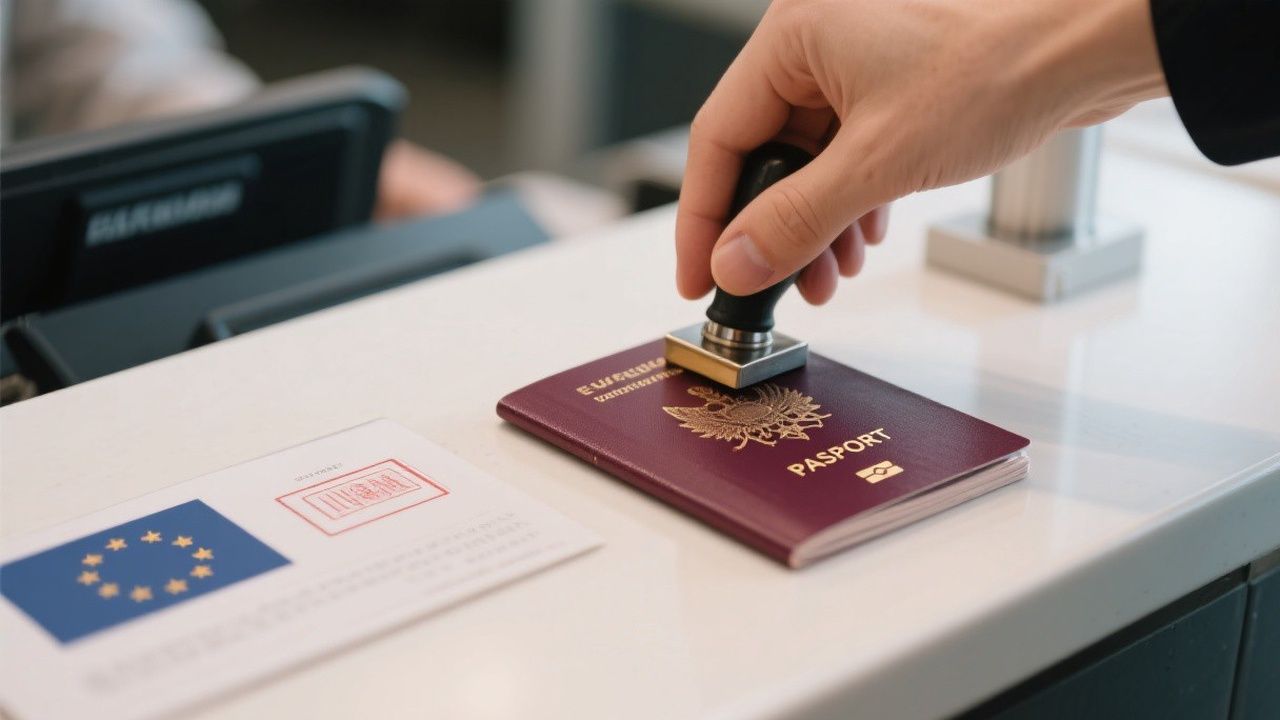
Within the Schengen Zone, there are typically no border checks. You can travel from Paris to Berlin to Rome without showing your passport once. However, occasional spot checks do happen, especially on trains and buses near borders with non-Schengen countries. I have been checked twice on trains between Austria and Hungary, and once on a bus from Croatia to Bosnia. Always carry your passport with you, not in your checked luggage. I keep mine in a neck pouch under my shirt during travel days.
Crossing from a Schengen country to a non-Schengen country requires a full border check. The most common crossings for multi-country trips are between Schengen and the UK (via Eurostar from Paris or Brussels to London), Schengen and Serbia/Bosnia/Montenegro (popular for Balkans itineraries), and Schengen and Turkey (via bus from Bulgaria or Greece). The Eurostar from Paris to London requires arriving 30-45 minutes early for passport control and security screening. The process is similar to a flight but smoother. I have done it six times and the longest I have waited at passport control is 20 minutes.
For Balkans travel, buses are the primary mode of transport between countries. The bus from Dubrovnik, Croatia to Kotor, Montenegro takes about 2.5 hours and costs 15-25 EUR. The border crossing is quick (15-30 minutes) but can be slow in summer when multiple buses arrive simultaneously. Carry small bills in euros for border areas, as some money changers at crossings charge exorbitant rates. I once exchanged 50 EUR at a border crossing in Bosnia and received an effective rate 15% worse than the official rate. Always exchange money in cities, not at borders.
Essential Tips to Keep in Mind
- Limit your trip to 4-6 countries for a 2-3 week itinerary. More countries means more transit time, less actual experience time, and higher transportation costs.
- Travel with a single carry-on backpack (40-45 liters). European trains have limited luggage space, and cobblestone streets make rolling suitcases miserable.
- Get a SIM card or eSIM for data. I use Airalo eSIM (5-15 EUR for 5-10 GB depending on the region) and it works across multiple European countries without swapping cards.
- Notify your bank before traveling. European card terminals use chip-and-PIN, and some US cards without PINs may not work at unattended machines (transit, parking, tolls).
- Download offline maps for every city you plan to visit. Google Maps offline mode is essential for navigation without data.
- Keep a digital copy of your passport, travel insurance, and all booking confirmations in cloud storage. I also carry a printed copy of my passport in a separate bag from the original.
Frequently Asked Questions
How much does a multi-country Europe trip cost per day?
On a budget, 50-80 EUR per day is achievable in Eastern and Southern Europe (hostel dorms, street food, public transit, free walking tours). For Western Europe, budget 80-150 EUR per day for a comfortable mid-range experience (private hostel room or budget Airbnb, restaurant meals, paid attractions). My five-country trip averaged 95 EUR per day across France, Spain, Italy, Croatia, and Slovenia.
Is the Eurail Pass worth it for a short trip?
For trips under 10 travel days, individual advance-purchase tickets are usually cheaper. The Eurail Pass becomes more cost-effective at 15+ travel days or if you need maximum flexibility and cannot commit to specific dates months in advance.
How do I handle different currencies?
The euro is used in 20 EU countries. For non-euro countries (Czech Republic, Poland, Hungary, Croatia, Sweden, Denmark), withdraw local currency from ATMs upon arrival. Never exchange money at airports or hotels. Use a no-foreign-transaction-fee card like Wise or Revolut for the best exchange rates.
Final Thoughts
The best multi-country Europe trip I ever took covered France, Spain, Italy, Croatia, and Slovenia in 42 days. I spent four to eight nights in each country, traveled almost entirely by train, and came home feeling like I had actually understood each place rather than just photographed it. The trip cost about 4,000 EUR total including flights, accommodation, food, and activities. It was not the cheapest possible Europe trip, but it was the most rewarding. The secret was simple: fewer countries, more time in each, and meticulous logistics planning. Europe rewards depth over breadth every single time.