The Ultimate Guide to Exploring Chiang Mai: Temples, Food, and Nature
Chiang Mai hit me differently than any other city in Southeast Asia. I arrived on an overnight train from Bangkok -- a 13-hour journey in a second-class sleeper that cost 881 baht ($25) and deposited me at the old station at 7:30 AM, groggy but already charmed by the cool morning air. Within an hour of checking into my guesthouse near the moat, I was sitting on a plastic stool at a street stall eating khao soi gai (northern Thai coconut curry noodle soup) for 50 baht ($1.40) and watching monks in saffron robes collect alms. I ended up staying 11 days instead of the four I had originally planned. This Chiang Mai travel guide is everything I learned during that unexpectedly long visit.
Chiang Mai sits in a mountain valley in northern Thailand, about 700 kilometers north of Bangkok. The city's elevation (300 meters above sea level) keeps temperatures noticeably cooler than the capital, especially from November to February when nighttime lows dip to 15 degrees Celsius (59 Fahrenheit). The old city, enclosed by a square moat and crumbling brick walls dating to the 13th-century Lanna Kingdom, contains over 30 temples within walking distance. Beyond the moat, the city sprawls outward with modern cafes, coworking spaces, and a thriving digital nomad scene. A monthly budget of $800 to $1,200 covers comfortable living including rent, food, and activities.
old city temple circuit
Start at Wat Phra Singh, the old city's most revered temple, located on Sam Lan Road near the moat's western edge. The temple houses the Phra Singh Buddha image, brought from Sri Lanka in the 14th century, and the assembly hall features stunning Lanna-style murals depicting scenes from local life. Entry is free, but donations are appreciated. I visited at 8:00 AM and watched monks chanting in the main viharn while the morning light streamed through the open doors. The Lai Kham chapel behind the main hall contains the finest woodcarvings and gold leaf work in the city.
Walk 10 minutes south to Wat Chedi Luang, home to a massive ruined stupa that once stood 90 meters tall before a 1545 earthquake toppled the upper portion. The remaining 60-meter structure is still imposing, and the modern viharn next to it houses the city pillar, a sacred object believed to protect Chiang Mai. I hired a local guide through the temple's "Monk Chat" program (free, donations accepted) and spent an hour talking with a young monk named Phra Pichit about Buddhism, meditation, and daily life at the temple. It was the most meaningful cultural exchange of my entire Thailand trip.
Wat Umong, located in a forested area west of the old city, is my personal favorite. The 14th-century temple features a network of underground tunnels lined with faded Buddha images, and the surrounding forest contains ancient brick stupas hidden among trees. I arrived at 4:00 PM and had the tunnels almost entirely to myself. The atmosphere is meditative and slightly mysterious -- I kept expecting to turn a corner and find a hermit monk sitting in the darkness. The temple also has a meditation center that offers free daily sessions for visitors. A 30-baht tuk-tuk ride from the old city gets you there in 10 minutes.
Sunday walking street market
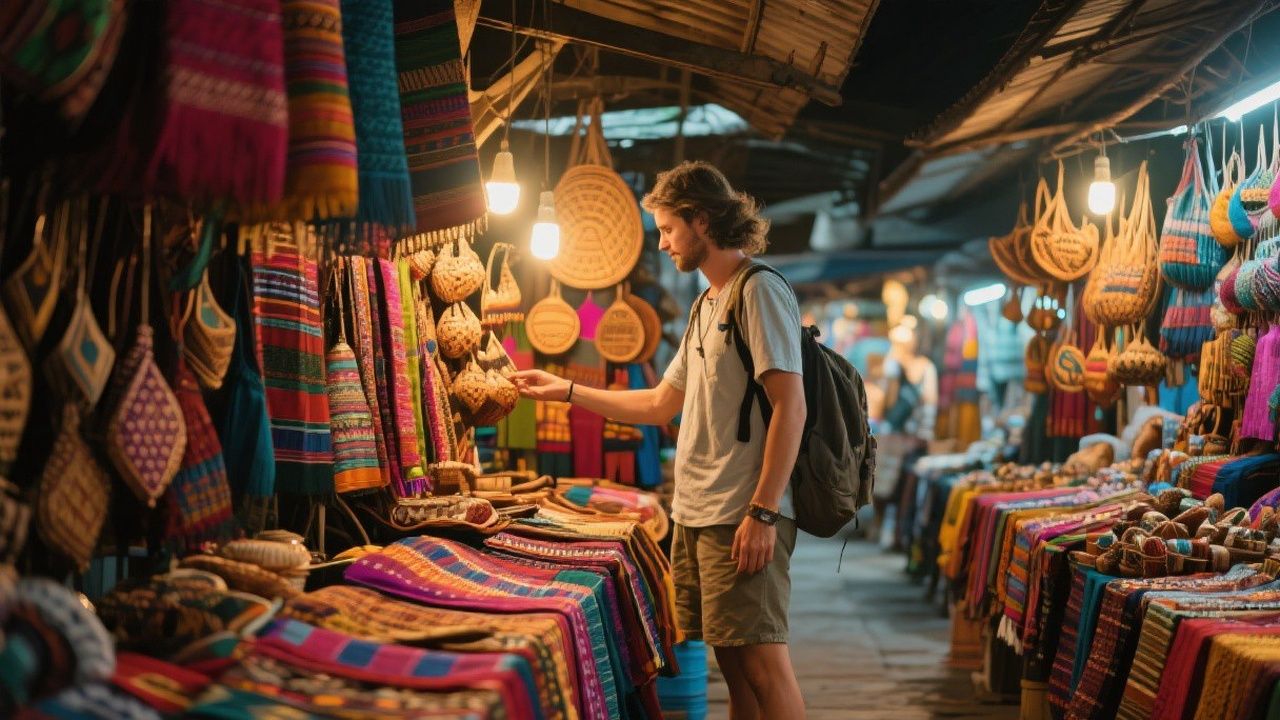
Every Sunday from 4:00 PM to roughly 10:00 PM, Ratchadamnoen Road and several connecting streets in the old city transform into the Sunday Walking Street Market. This is not your typical tourist night market -- it is a sprawling, vibrant, genuinely local affair that stretches for over a kilometer. I went every Sunday during my 11-day stay and still did not see every stall. The market sells everything from handmade silver jewelry and handwoven scarves to coconut ice cream served in a coconut shell and grilled pork skewers for 10 baht each.
Food is the main attraction for me. I ate my way through the market systematically: papaya salad from a woman who prepared it in a massive wooden mortar (30 baht), mango sticky rice wrapped in banana leaf (25 baht), a bowl of boat noodles from a vendor who had been selling at the market for 20 years (40 baht), and fresh-squeezed pomegranate juice for 20 baht. My total food spending for one Sunday evening was about 200 baht ($5.70), and I ate until I was uncomfortably full. The quality is remarkably consistent -- I did not have a single bad meal at the market across four visits.
Beyond food and crafts, the market features live music at multiple points along the street. I listened to a blind guitarist playing traditional Lanna songs, a group of university students performing Thai pop covers, and a solo violinist who somehow made a Bob Marley song sound elegant. The energy is joyful and communal. Bring cash -- while some vendors accept QR code payments, most operate on a cash-only basis. There are ATMs along the route, but the lines can be long.
Doi Inthanon day trip
Doi Inthanon, Thailand's highest peak at 2,565 meters, sits about 100 kilometers southwest of Chiang Mai in Doi Inthanon National Park. I booked a shared minivan tour through my guesthouse for 800 baht ($23) per person, which included hotel pickup, park entry (300 baht for foreigners), and stops at the summit, two chedis, a waterfall, and a Karen hill tribe village. The drive takes about 1.5 hours each way through increasingly mountainous terrain.
The summit area features two chedis (stupas) built to honor the king and queen, surrounded by manicured gardens that feel almost alpine. At 2,565 meters, the temperature was a bracing 8 degrees Celsius (46 Fahrenheit) when I visited in December -- a shocking contrast to the 30-degree heat in the city. Bring a jacket. The views from the summit on a clear day extend across the mountain range to the Myanmar border. Unfortunately, cloud cover obscured the panorama during my visit, but the misty atmosphere had its own moody beauty.
The highlight for me was the Kew Mae Pan Nature Trail, a 2.2-kilometer boardwalk loop through cloud forest near the summit. The trail passes through moss-draped rhododendron trees, across ridgelines with sheer drops, and through sections where you walk literally inside the clouds. Our guide pointed out birds I had never seen -- the green-tailed sunbird and the chestnut-tailed minla -- and explained that this forest exists at an altitude found nowhere else in Thailand. The trail is only open from November to May and requires a park ranger escort (included in tours). It was the single most beautiful hike of my entire Southeast Asia trip.
best time to visit
The cool season from November to February is the most popular time to visit Chiang Mai, with daytime temperatures around 25 to 28 degrees Celsius (77-82 Fahrenheit) and minimal rainfall. This is also when the city hosts its major festivals: Yi Peng (lantern festival) in November and Flower Festival in February. Hotel rates during these peak weeks can double, so book early. I visited in early December and paid 500 baht ($14) per night for a private room with a fan at Banilah Guesthouse, which I considered excellent value.
The hot season from March to May brings temperatures above 35 degrees Celsius (95 Fahrenheit) and agricultural burning that creates a significant haze problem. Air quality can drop to unhealthy levels, and I would not recommend visiting during April unless you want to experience Songkran (Thai New Year water festival). The rainy season from June to October sees afternoon downpours that last one to two hours but also transforms the surrounding countryside into vivid green. Hotel rates drop 30 to 40 percent, and the fewer tourists mean a more relaxed atmosphere at temples and markets.
Essential Tips to Keep in Mind
- Rent a scooter for 200 to 300 baht ($6-$9) per day if you are comfortable riding one. It is by far the most convenient way to explore Chiang Mai and the surrounding countryside. International driving permits are technically required, though enforcement is inconsistent.
- Only visit ethical elephant sanctuaries. Avoid any place that offers elephant riding or shows. I visited Elephant Nature Park (2,500 baht, about $71) and fed, bathed, and walked with rescued elephants in a river. It was the most emotionally moving experience of my trip.
- Get a Thai massage. Chiang Mai is famous for them, and prices are a fraction of what you would pay in Bangkok or Phuket. I paid 250 baht ($7) for an hour-long massage at the Women's Massage Center by Ex-Prisoners, a social enterprise that trains formerly incarcerated women.
- Take a cooking class. Most half-day classes cost 800 to 1,200 baht ($23-$34) and include a market visit, hands-on cooking instruction for four to five dishes, and a recipe book to take home. I did a class at Asia Scenic and learned to make green curry from scratch.
- Download Grab (Southeast Asia's Uber equivalent) for affordable rides around the city. A trip across town typically costs 60 to 100 baht ($1.70-$2.85).
Frequently Asked Questions
How many days do you need in Chiang Mai?
Three days covers the main temples, a night market visit, and one day trip. Five to seven days lets you explore at a relaxed pace, take a cooking class, visit an elephant sanctuary, and do a multi-day trek. I stayed 11 days and could have easily filled another week.
Is Chiang Mai safe for solo travelers?
Very safe. I traveled solo as a woman and never felt uncomfortable, even walking home after midnight. The old city is well-lit and busy. Use normal precautions with your belongings and be cautious on scooters -- traffic accidents are the most common safety issue for tourists.
What should I do about the burning season haze?
If you visit between February and April, check the Air Quality Index (AQI) daily. Readings above 150 are unhealthy for sensitive groups; above 200 is unhealthy for everyone. Wear an N95 mask outdoors and consider visiting southern Thailand or Laos instead if readings are consistently hazardous.
Final Thoughts
Chiang Mai is the kind of place that makes you reconsider your return flight date. The temples are stunning, the food is extraordinary, the surrounding mountains are beautiful, and the cost of living makes it possible to linger. But what really sets Chiang Mai apart is the warmth of the people -- from the monk who shared his lunch with me at Wat Umong to the market vendor who threw in extra mango sticky rice because I was a regular customer. If you are looking for things to do in Chiang Mai, start with the temples and the Sunday market, then let the city lead you from there. It will not disappoint.